Mushroom Farming & Training in Rohini, Pitampura, Shalimar Bagh & Model Town: How to Run a Zero-Smell, High-Profit Unit Inside Urban Flats & Basements
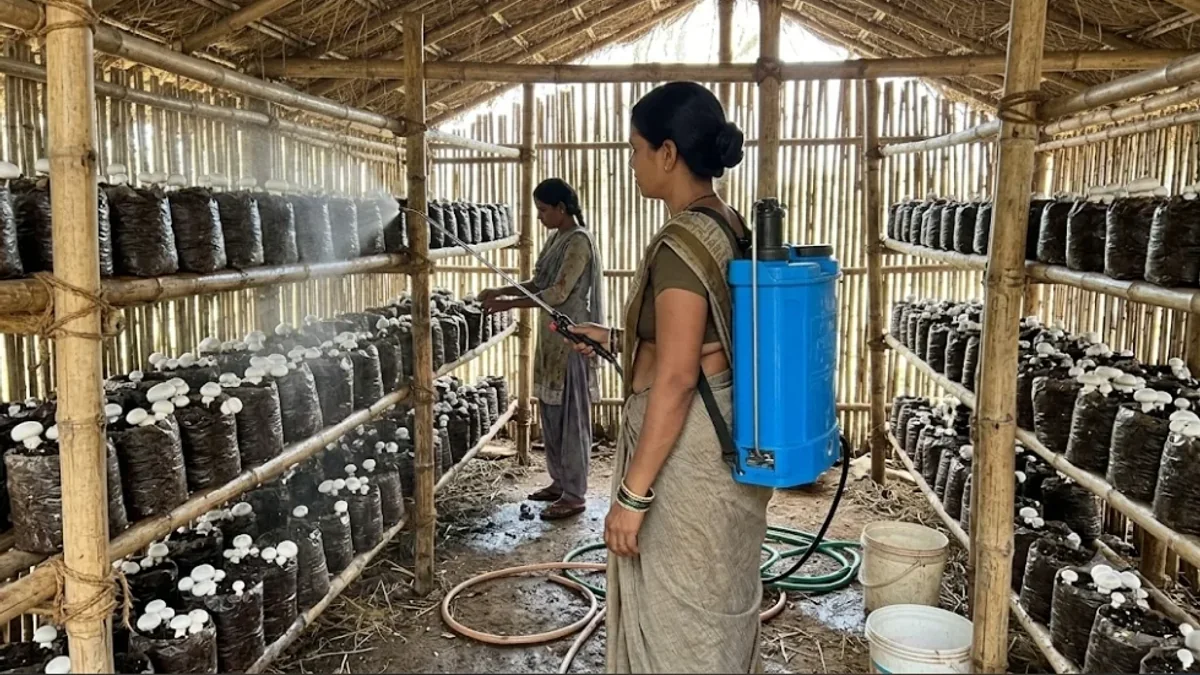
If you live in Rohini (Sectors 1 to 37), Pitampura, Shalimar Bagh, Model Town, Prashant Vihar, Rani Bagh, or Paschim Vihar, your living setup is completely different from someone living in a rural village. Here in North-West Delhi, most families live in DDA flats, 4-story builder floors with stilt parking, houses with a small Barsati (top-floor terrace room), or commercial basements.
When students, homemakers, and working professionals from Rohini or Pitampura call us to inquire about our practical mushroom farming training course, they never ask about 1-acre fields. Instead, they ask very specific urban questions:
- “Sir, I live on the 3rd floor in Rohini Sector 15; how can I boil wheat straw without creating smoke in my society?”
- “We have an empty basement in Pitampura/Model Town, will mushrooms grow there without sunlight?”
- “Rats come into our stilt parking/storeroom at night—won't they tear the polybags to eat the wheat grain spawn?”
Over the past few years, some of our most successful urban micro-entrepreneurs have come right out of North-West Delhi. Because you are surrounded by high-income residential sectors, massive food hubs like Netaji Subhash Place (NSP) and DC Chowk, and sit just 15 minutes away from Azadpur Mandi, you can sell every single kilogram of mushroom within a 5-kilometer radius of your home.
Here is the complete, real-world blueprint for turning a spare room, barsati, or basement in North-West Delhi into a clean, odor-free mushroom production unit.
1. Choosing Your Urban Space: Basement vs. Spare Bedroom vs. Terrace Barsati
In urban areas like Rohini, Shalimar Bagh, and Kohat Enclave, people usually have one of three types of spare spaces. Each space behaves differently with Delhi's weather, and in our mushroom cultivation training, we teach you how to customize your setup for each:
| Space Available in North-West Delhi | Natural Advantage | The Hidden Technical Challenge | Our Training Solution (How to Fix It) |
|---|---|---|---|
| 1. Builder Floor Basement (Common in Pitampura, Model Town, Saraswati Vihar) | Naturally stays 5°C to 7°C cooler than outside air during hot Delhi summers; retains 80% humidity easily. | Heavy Carbon Dioxide (CO2) settles at the bottom because warm air rises; poor natural airflow. | Install a 4-inch PVC duct pipe connected to an inline exhaust fan placed near the floor level (since CO2 is heavier than oxygen) to pull stale air out twice a day for 15 minutes. |
| 2. Top-Floor Barsati / Terrace Store (Common in Rohini Sectors, Rani Bagh, Avantika) | Great natural cross-ventilation; completely separate from family living quarters. | Direct afternoon sunlight heats up the roof slab in April–May and October, drying out bags. | Apply a ₹600 coat of white lime + Fevicol reflective wash on the outer roof terrace, hang a double-layered 75% green shade net outside the wall, and line the inside ceiling with 1-inch thermocol sheets. |
| 3. Spare DDA Flat Room / Balcony Store (Common across Rohini Sec 3–28 & Shalimar Bagh) | Zero rent, safe from street dust, stable room temperature between September and March. | Worry about floor water seepage or wall paint damage from daily water misting. | Use the Plastic Tent Chamber Method—build a simple PVC or bamboo frame inside the room wrapped in heavy-gauge transparent poly-sheet so not a single drop of moisture touches your flat's walls or floor tiles. |
2. Problem #1 Solved: “How Do I Sterilize Straw in a Flat Without Firewood or Smoke?”
In rural areas, farmers light a wood fire under a big iron drum to boil wheat straw (Bhusa). Obviously, if you try burning wood or creating smoke in a Rohini DDA society or a Pitampura builder floor, your neighbors and RWA will complain within 10 minutes.
In our urban mushroom training module, we teach two 100% Smokeless, Balcony-Friendly Sterilization Methods that require zero firewood:
Method A: The 200-Liter Blue Plastic Drum + 2kW Waterproof Immersion Rod (Hot-Water Pasteurization)
- If you want 100% organic Oyster or Milky mushrooms without chemicals, buy a heavy-duty 200-liter blue plastic drum (easily available in Mangolpuri or Azadpur plastic market for ₹900).
- Fill it halfway with tap water, dip a heavy-duty 2,000-Watt ISI Waterproof Copper Immersion Heater Rod (₹650) to heat the water to 65°C–70°C (check with a ₹150 digital kitchen thermometer), and dip your wheat straw tied inside a clean nylon mesh bag (Jali ki bori) for 60 minutes.
- Result: Zero smoke, zero smell, fits inside a 4×4 ft bathroom or balcony corner, and kills all competitor mold spores completely.
Method B: The Cold Water Lime / Food-Grade Sterilization Technique
- For growers who want to prepare 20 to 50 bags quickly without heating water, we teach the exact Hydrated Calcium Hydroxide (Chuna) pH-Shift Method or measured Bavistin + Formalin protocol (with strict safety gloves and masks), which raises the water pH to 11.5 so green mold (Trichoderma) cannot survive, while oyster mushroom mycelium grows rapidly.
Method C: Zero-Straw “Readymade Spawned Bags” (Best for Button Mushroom in Flats)
- Want to grow White Button Mushrooms from November to February in Rohini or Model Town without touching raw straw at all? Through our grower network, you can order pre-pasteurized, ready-spawned 10-kg Button Mushroom Compost Bags from nearby Alipur/Sonipat tunnels. You simply place the ready bags on racks in your room, apply sterile casing soil after 12 days, and start harvesting fresh button mushrooms!
3. Solving 3 Real Urban Pests: Rats, Black Mushroom Flies & Drainage Gnats
When you grow mushrooms inside a city house, your enemies are different from farm pests. Here are the 3 biggest headaches North-West Delhi growers face—and how our training solves them permanently:
- The Rat Problem (Chuhe Bag Phaad Dete Hain):
- Why It Happens: Mushroom spawn is made on boiled wheat grains. During the first 10 days after bag filling, rats smell the wheat grain inside the polybag and chew through the plastic at night, ruining the bag.
- The Rope-Hanging Solution (Chhat Se लटकाने की तकनीक): Instead of keeping Oyster mushroom bags on low floor tables where rats can climb, we teach the Vertical Nylon Rope Hanging System. Using a single ceiling hook, you hang 5 to 6 bags vertically in the air like a chandelier, 2 feet above the floor, with an inverted plastic cup threaded at the top of the rope as a Rat Guard. It saves ₹4,000 on iron racks, holds 30% more bags in a 10x10 room, and rats can never reach them!
- Black Sciarid & Phorid Flies (Chote Kaale Machhar):
- Why It Happens: In urban colonies, tiny black flies enter through bathroom exhaust gaps or balcony doors, attracted by the sweet, earthy smell of growing mycelium. They lay eggs inside the bag, and their larvae eat the mushroom roots.
- The Solution: Before placing a single bag in your room, seal the window and exhaust fan frame with 150-Mesh White Nylon Insect Netting (using Velcro tape so you can wash it), hang Yellow Sticky Traps near a 5-Watt blue/white bulb, and spray a 0.5% Azadirachtin (Pure Neem Oil) solution on the outer room walls every 7 days.
- Chlorinated Tap Water & Roof Tank Heat:
- In Rohini and Pitampura, overhead black plastic water tanks (Sintex) get boiling hot in the afternoon, and fresh DJB supply water sometimes has high chlorine. Always store 20 liters of water in an indoor bucket overnight—this lets excess chlorine gas evaporate naturally and brings the water temperature down to 20°C before you mist your mushroom pinheads.
4. Where to Get Raw Materials & Sell at ₹200+/Kg in Rohini, Pitampura & Model Town
You don't need to travel 50 km outside Delhi to buy raw materials or sell your harvest. Here is your hyper-local North-West Delhi business map:
Local Raw Material & Spawn Access:
- Doorstep Lab-Tested Spawn Delivery: We deliver 100% pure, first-generation Button, Oyster, and Milky Mushroom Spawn directly to all North-West Delhi pincodes—including Rohini (110085, 110086, 110089), Pitampura (110034), Shalimar Bagh (110088), Model Town (110009), Rani Bagh, and Ashok Vihar (110052).
- Clean Wheat Straw (Turi/Bhusa): Available in 25-kg and 40-kg sacks at local fodder shops (Chara Tals) near Haiderpur Village, Mangolpuri, Sultanpuri border, Rithala, and Bhalswa Dairy at ₹8 to ₹10 per kg.
High-Margin Local Selling Spots (Skip the Middleman!):
- Japanese Park (Swarn Jayanti Park, Rohini) & District Park Pitampura Morning Health Crowd:
Every morning between 6:00 AM and 8:30 AM, thousands of health-conscious families, gym-goers, and senior citizens visit Japanese Park and Pitampura District Park. Several of our trainees sell 50 to 80 packets of chemical-free Oyster & Button Mushrooms (200g punnets @ ₹40–₹50 each) right through morning-walk WhatsApp groups and local organic carts! - Netaji Subhash Place (NSP), DC Chowk (Rohini Sec-9) & M2K Food Hubs:
NSP and DC Chowk have over 250+ cafes, momo franchises, pizza chains, cloud kitchens, and North Indian restaurants. A single cafe uses 3 kg to 8 kg of fresh mushrooms every single day. By offering them unwashed, chemical-free, farm-fresh mushrooms harvested 2 hours ago, you can easily lock in 10 restaurants at ₹160 to ₹190/kg fixed year-round rate. - Azadpur Sabzi Mandi (Just 10–20 Minutes Away):
If you expand your setup and ever have 50 kg+ surplus production on any day, Azadpur Mandi is right down the Outer Ring Road from Shalimar Bagh, Model Town, and Pitampura—meaning zero unsold stock!
5. What You Get in Our Certified Mushroom Training Course (Online + Practical Support)
Whether you are a college student in Rohini, a homemaker in Shalimar Bagh looking for a ₹20,000–₹35,000/month side income from a spare room, or an entrepreneur in Model Town planning a commercial unit, our Organic Mushroom Farm Training Course covers:
- Step-by-Step Practical Videos & Live Sessions: Smokeless substrate sterilization, exact moisture testing, layer spawning, casing soil formula, and humidity/CO2 management inside flats and basements.
- Complete Urban Setup Blueprint: How to set up a 100-bag room in Rohini/Pitampura under ₹7,000 to ₹10,000 total budget.
- Government-Valid Training Certificate: Essential for applying for the Mudra Loan (up to ₹5 Lakh) or 35% PMFME Food Processing Subsidy from nationalized banks in Rohini, NSP, or Model Town.
- Direct WhatsApp/Telegram Lifetime Mentorship: Send photos or short videos of your mushroom bags at day 5, day 12, and pinning stage so our experts can check your mycelium health personally.
Real Questions from Rohini, Pitampura & Shalimar Bagh Residents (FAQs)
Q1: “Sir, main Rohini Sector 16 me DDA flat me rehta hu, kya mushroom ugane se ghar ke bacho ya family ko spore allergy toh nahi hogi?”
A: Great question! Button mushrooms do not release spores at all because they are harvested while the cap veil is still closed. For Oyster mushrooms, spores are only released if you leave the mushroom over-mature on the bag. In our training, we teach you how to harvest Oyster mushrooms at the “Curled-Edge Stage” (24 hours before spore release) and keep the growing bags inside a zipped poly-sheet enclosure so the rest of your flat stays 100% clean and spore-free.
Q2: “Pitampura ya Model Town ke basement me dhoop (sunlight) bilkul nahi aati, kya mushroom bina suraj ki roshni ke ug jayega?”
A: Yes, 100%! Mushrooms do not have chlorophyll and do not perform photosynthesis—in fact, direct sunlight kills mushroom mycelium. During the first 15 days (Spawn Run), the basement needs complete darkness. During fruiting (next 15 days), a single 9-Watt LED bulb turned on for 6–8 hours a day is more than enough for healthy fruiting!
Q3: “Rohini aur Pitampura me Mushroom Training Course kaise join karein aur Spawn kitne din me ghar aayega?”
A: You can enroll in our Online Practical Mushroom Training Course (or book a seat for our offline hands-on workshop) directly at organicmushroomsfarm.com. Once you book your Button, Oyster, or Milky Mushroom Spawn, we dispatch fresh first-generation lab packets that reach Rohini, Pitampura, Shalimar Bagh, and Model Town within 2 to 3 working days.