Where to Buy Lab-Tested Mushroom Spawn in Delhi NCR: Strains, Pricing, Quality Check & Dosage Guide
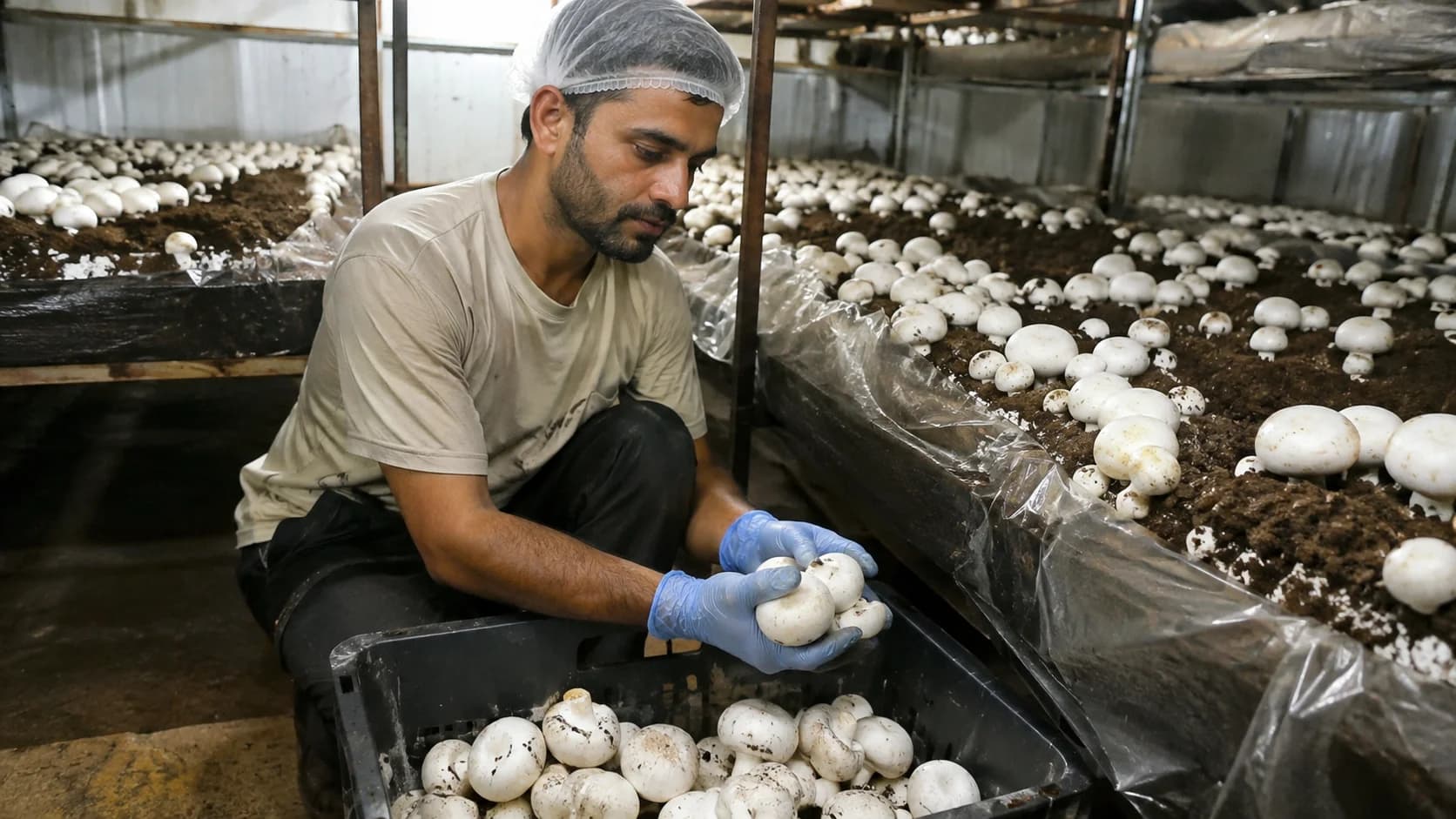
Ask any commercial mushroom grower in Najafgarh, Narela, or Sonipat border what decides a farm's profit, and they will give you a one-word answer: Spawn.
In mushroom cultivation, there are no botanical "seeds." What we call mushroom seed is actually Mushroom Spawn—sterilized cereal grains (typically high-grade wheat or sorghum) balanced with calcium carbonate (CaCO3) and gypsum (CaSO4), colonized by pure mushroom mycelium under strict laminar-flow laboratory conditions.
Yet, every season in Delhi, hundreds of first-time urban growers in Rohini, Dwarka, and Laxmi Nagar lose their very first batch—not because their room setup was wrong, but because they inoculated their bags with heat-damaged, third-generation, or bacterially soured spawn bought from unverified marketplace listings.
Here is everything you need to know before ordering mushroom spawn in Delhi NCR.
1. Why "Cheap Marketplace Spawn" Fails in Delhi's Climate
When you order random mushroom seed packets from generic e-commerce portals, two things usually go wrong before the packet even reaches your doorstep in Delhi:
Thermal Shock in Transit: Standard courier hubs leave parcels inside non-ventilated metal containers where temperatures cross 38°C. High heat kills active mycelium tips and triggers anaerobic bacterial fermentation (Bacillus wet spot), turning the grain sour.
Sub-Cultured (3rd or 4th Generation) Degeneration: A genuine lab produces Mother Spawn from tissue culture and multiplies it once to create First-Generation Commercial Spawn. Unverified traders keep multiplying bags from older commercial bags (G3/G4). The result? Slow colonization, stroma formation, deformed pinheads, and 40% lower biological efficiency (yield).
2. Best Mushroom Spawn Strains for Delhi NCR Growers
Selecting the right strain for Delhi's seasonal window is critical for compact caps and heavy flushes:
| Mushroom Type | Recommended Lab Strains | Ideal Growing Window in Delhi | Key Yield Advantage |
|---|---|---|---|
| White Button (Agaricus bisporus) | U-3, S-11, DMR-03 | Nov – Feb (Seasonal) / Year-round in AC rooms | Tight white caps that stay closed longer in Azadpur & Okhla retail markets. |
| Oyster (Pleurotus spp.) | P. florida (White), P. sajor-caju (Grey), Hypsizygus | Sept – March (Indoor rooms) | Fast 14-day colonization on wheat straw; high resistance to competitor molds. |
| Milky (Calocybe indica) | APK-2 / IIHR Strains | March – August (Summer months) | Thrives in 30°C–38°C Delhi summers with thick stalks and 7-day shelf life. |
3. Visual Inspection: How to Check Spawn Purity Before Spawning
Never open and mix a spawn bag into your substrate without performing this 30-second inspection:
The Coat Check: Healthy spawn has a uniform, silky-white cottony mycelium covering every grain. If you see greenish powdery patches (Trichoderma), black pin-dots (Aspergillus), or pink/orange stains (Neurospora), discard the bag immediately—never mix it with healthy bags.
The Nose Test: Cut a corner of the polypropylene bag and smell it. Pure spawn smells distinctly like fresh forest mushrooms. If it smells like sour curd, vinegar, or alcohol, it has bacterial contamination.
The Moisture & Clump Check: Gently squeeze the bag from the outside. The grains should break apart smoothly without leaving yellow slimy liquid at the bottom of the bag or sticking together like wet dough.
4. Exact Spawn Dosage Calculator (How Much Spawn to Order?)
Ordering too little spawn slows down mycelium run (giving green mold a chance to attack), while adding too much increases bag temperature and cost. Use this standard calculation for your Delhi setup:
For Oyster & Milky Mushrooms (Straw Substrate):
- Standard Rate: 2.5% to 3% of the wet pasteurized straw weight.
- Bag Calculation: 1 kg of fresh spawn is sufficient for 4 to 5 large polybags (10 kg wet weight each) or 7 to 8 compact bags (6 kg wet weight each).
- 10x12 Room Trial (100 Bags): You will need 15 kg to 20 kg of spawn.
For Button Mushrooms (Pasteurized Compost):
- Standard Rate: 0.5% to 0.75% of ready compost weight.
- Bag Calculation: 1 kg of spawn covers 140 kg to 180 kg of compost (roughly 14 to 18 standard 10-kg compost bags).
- 1-Ton Compost Shed: You will need 6 kg to 7.5 kg of spawn.
5. Mushroom Spawn Price List in Delhi NCR (2026–27)
At Organic Mushroom Farm, we maintain transparent pricing based on order volume and lab batch scheduling:
- Trial / Home Grower Packs (1 kg to 5 kg): ₹130 to ₹170 per kg (plus standard transit packaging & delivery).
- Micro-Farm / Room Setup Orders (10 kg to 30 kg): ₹110 to ₹130 per kg.
- Commercial Bulk Orders (50 kg+ for Narela, Najafgarh, Bawana & NCR farms): ₹85 to ₹105 per kg.
6. Storage Rules & Doorstep Delivery Across Delhi NCR
If your pasteurized straw or compost is not ready on the day your spawn arrives, follow these strict storage rules to keep the mycelium active:
Short-Term Room Storage (3 to 4 Days in Winter): Keep the bags upright in a clean, dark, well-ventilated room at 15°C–22°C. Do not stack bags on top of each other, as internal metabolic heat can build up.
Refrigerator Storage (Up to 30 Days): Store spawn bags in the lower vegetable crisper compartment of a standard refrigerator at 4°C to 6°C. Never place spawn inside a deep freezer (below 0°C)—freezing forms ice crystals that rupture mycelium cell walls and kill the seed instantly. Always allow refrigerated spawn to return to normal room temperature for 3 to 4 hours before spawning.
Direct Lab Dispatch Across Delhi NCR: We dispatch fresh, batch-coded spawn with breathable micro-filter plugs across all Delhi zones (110001 to 110096)—covering Rohini, Dwarka, Uttam Nagar, Janakpuri, Laxmi Nagar, Mayur Vihar, Shahdara, Okhla, Saket, Najafgarh, Narela, Bawana, Alipur, Chhatarpur, and adjoining Noida, Ghaziabad, Faridabad, and Gurugram sectors.
(Planning your complete room setup, compost sourcing, and mandi marketing? Read our complete Delhi Mushroom Farming & Training Master Guide.)
Frequently Asked Questions (FAQs)
Q1: Can I prepare mushroom spawn at home in Delhi without a lab?
A: No. Preparing grain spawn requires an Autoclave (121°C at 15 psi steam sterilization), a HEPA-filtered Laminar Air Flow bench, and a BOD Incubator. Boiling grain in a kitchen pressure cooker in open room air leads to 99% green mold (Trichoderma) contamination. Buying lab-tested spawn is far safer and more economical.
Q2: What is the shelf life of fresh mushroom spawn after delivery?
A: At normal room temperature (18°C–25°C), fresh spawn should be used within 7 to 10 days. If stored inside a refrigerator or cold room at 4°C to 6°C, it remains viable and vigorous for 30 to 45 days.
Q3: How can I order fresh mushroom spawn or join practical training in Delhi NCR?
A: You can book fresh first-generation Button, Oyster, or Milky mushroom spawn—or register for our upcoming hands-on cultivation training—directly at organicmushroomsfarm.com with doorstep delivery across Delhi NCR.