Mushroom Farming in Delhi NCR: The Ground-Reality Guide to Training, Spawn Supply & Profitable Marketing
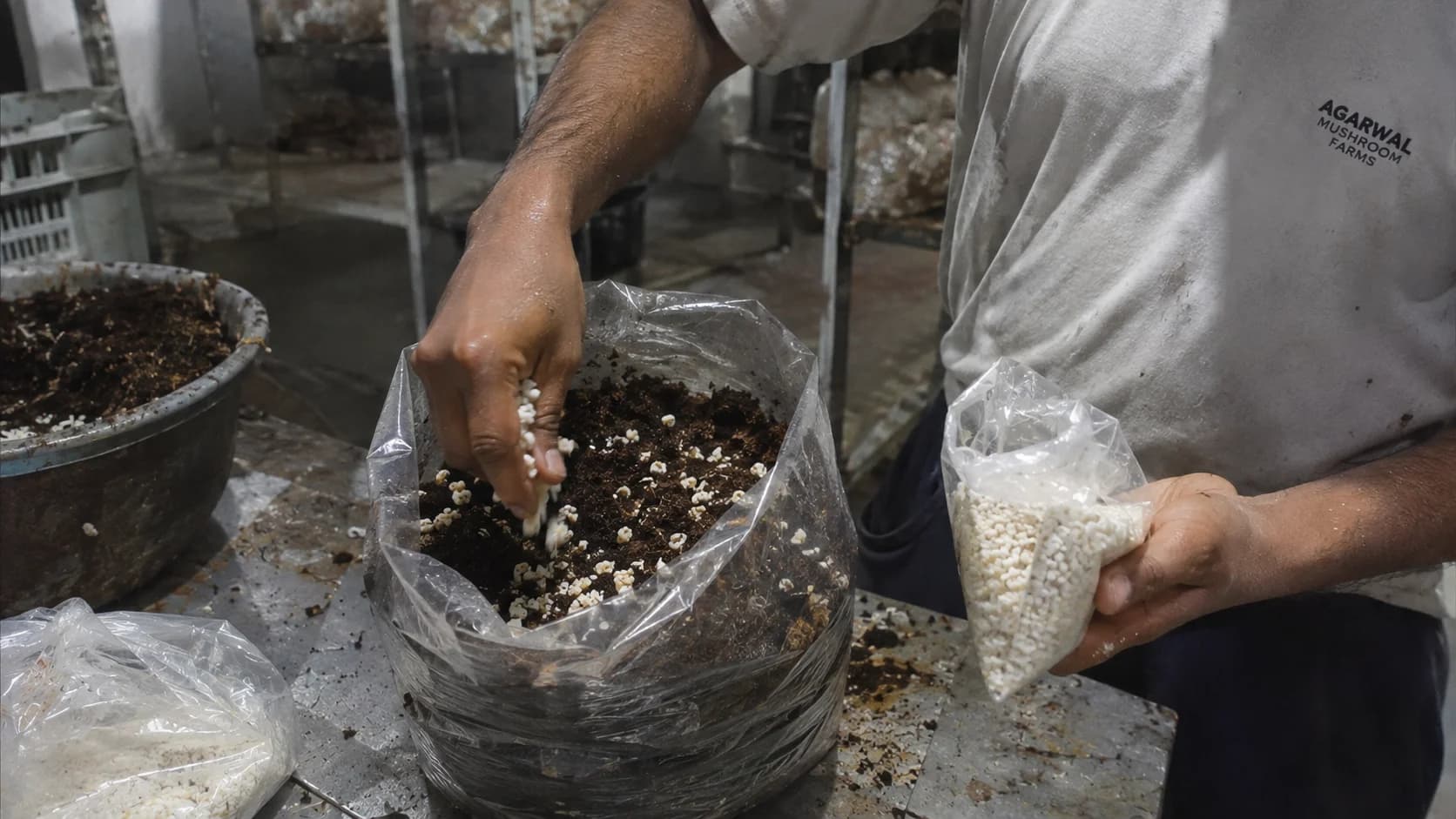
Whenever an aspiring entrepreneur from Rohini, Dwarka, Laxmi Nagar, or South Delhi reaches out to us, they almost always start with the same hesitation: "I live in a congested part of Delhi with zero agricultural land. Is mushroom farming even practical for me, or is it only meant for people with big plots in Haryana and UP?"
Here is the honest ground truth: Mushroom cultivation is an indoor vertical agribusiness, not traditional open-field farming.
While farmers in rural belts struggle with long-distance cold transport and middlemen eating into their margins, someone growing mushrooms in Delhi sits right inside India's largest high-paying consumption hub. Whether you have a spare 10x12 sq. ft. room in Uttam Nagar, a shaded rooftop in Shahdara, or a half-acre plot in Najafgarh or Narela, you can build a highly profitable mushroom unit—provided you understand Delhi's micro-climate and local supply chain.
Based on our hands-on experience training growers and setting up farms across India, here is the complete, no-fluff blueprint to starting your mushroom business in Delhi NCR.
1. Choosing the Right Mushroom for Delhi's Extreme Weather
Delhi's climate swings from 5°C in January to 45°C in May. If you try growing the wrong strain in the wrong month without climate control, your crop will fail. Here is how smart Delhi growers plan their yearly cycle:
Oyster Mushroom (Dhingri) – Best for 10x12 Rooms & Beginners: Thrives between 20°C and 30°C (September to March in Delhi). It does not require complex compost fermentation—just pasteurized wheat straw, polybags, and good room ventilation.
White Button Mushroom – Highest Daily Demand: Requires 14°C to 22°C. In Outer Delhi (Bawana, Alipur, Najafgarh, Chhatarpur), growers take 1 to 2 seasonal crops between November and February inside low-cost bamboo/insulated sheds. For 365-day production, a climate-controlled (AC) bunker room is used.
Milky Mushroom – The Summer Crop: Thrives in 28°C to 38°C (April to August). When local seasonal button mushroom supply drops in summer, Milky mushroom keeps your room productive.
2. Investment & Profit Breakdown: 3 Practical Models for Delhi
Instead of blindly investing lakhs on day one, choose the setup model that matches your space and budget:
| Setup Model | Space Needed | Ideal Delhi Locations | Estimated Setup Cost | Net Profit Margin |
|---|---|---|---|---|
| Model A: 1-Room Trial / Micro Unit (Oyster) | 10x12 ft. Room or Basement | Rohini, Dwarka, Laxmi Nagar, Janakpuri, Burari | ₹6,000 – ₹15,000 (100–200 Bags) | ₹12,000 – ₹22,000 per cycle |
| Model B: Seasonal Shed (Button / Oyster) | 500 – 1,000 sq. ft. Shed | Najafgarh, Narela, Bawana, Karawal Nagar, Badarpur | ₹45,000 – ₹85,000 | ₹60,000 – ₹1.2 Lakh per winter season |
| Model C: Commercial AC Unit (Button Mushroom) | 1,500+ sq. ft. Insulated Room (1–2 Ton Yield) | Outer Delhi, Noida/Ghaziabad/Sonipat Borders | ₹8 Lakh – ₹15 Lakh (Eligible for Subsidy) | ₹70,000 – ₹1.4 Lakh per month (Year-round) |
3. Why Hands-On Mushroom Training Saves You From Early Losses
Watching a few short videos online makes mushroom bag filling look effortless. However, 80% of untrained beginners in Delhi face three major issues within their first 15 days:
Green Mold (Trichoderma) Contamination: Caused by improper straw sterilization or excess moisture in the substrate.
Pinhead Death (Yellowing & Drying): Caused by high Carbon Dioxide (CO₂) buildup inside closed Delhi rooms with poor cross-ventilation.
Poor Casing & Watering Timing: Spraying chlorinated tap water directly at the wrong fruiting stage.
At Organic Mushroom Farm, our Online & Offline Practical Training Courses cover the exact scientific formulas—from TDS/pH water testing and formalin/hot-water treatment to humidity automation and post-harvest whitening—so your very first batch succeeds.
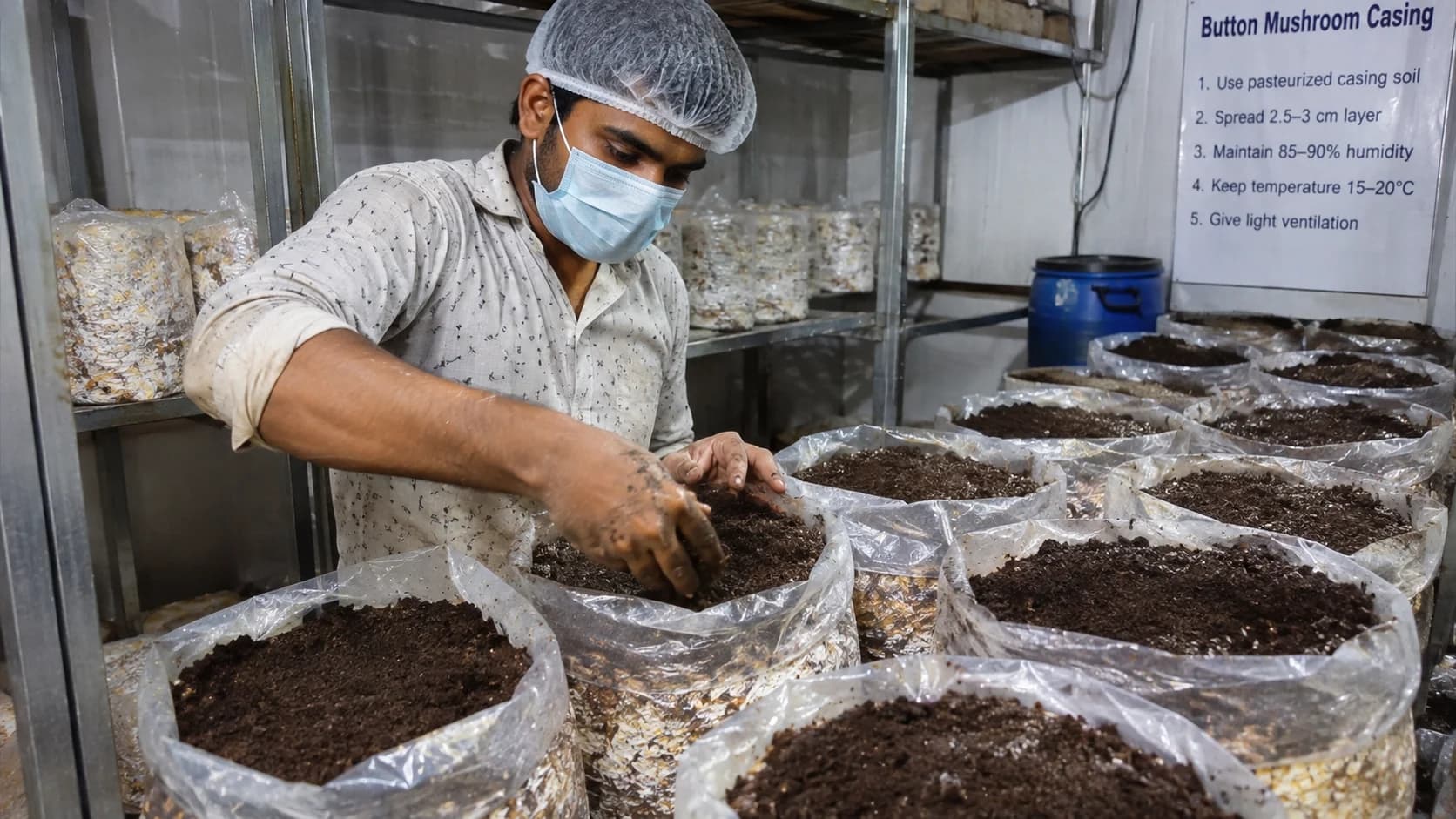
4. Sourcing Raw Materials & Lab-Tested Spawn in Delhi NCR
Your yield is only as good as your seed (spawn). Using old or over-multiplied local spawn results in delayed mycelium running and small, light-weight mushrooms.
Doorstep Spawn Delivery in Delhi: We supply 100% pure, first-generation, lab-tested Button, Oyster, and Milky Mushroom Spawn across all Delhi pincodes (110001 to 110096) with safe packaging that protects mycelium vitality during transit.
Where to Get Straw & Readymade Compost in Delhi: For small rooms, clean wheat straw (Turi/Bhusa) is easily available near Delhi's urban dairy hubs (Ghazipur Dairy, Kakrola, Masoodpur, Bhalswa) or from nearby Sonipat and Loni suppliers. If you live in a residential colony and want to grow Button mushrooms without making compost, we help connect you with pasteurized, ready-to-grow spawned compost bags.
5. Cracking the Delhi Market: Where to Sell for Maximum Profit
Growing mushrooms is half the business; selling them smartly is where the real money lies in Delhi:
Direct B2B & HoReCa Supply (₹180 – ₹250/kg): Delhi NCR has over 15,000 restaurants, cloud kitchens, cafes, and pizza chains across Connaught Place, Hauz Khas, Rajouri Garden, Saket, and CyberHub border. By packing fresh 200g punnet trays with your brand sticker, you can bypass middlemen and lock in daily morning deliveries at premium retail rates.
Major Wholesale Mandis (For Bulk Daily Volumes):
- Azadpur Mandi: The main mushroom auction happens early between 4:30 AM and 8:00 AM. Wholesale rates typically range from ₹90/kg to ₹145/kg depending on cap tightness and whiteness.
- Okhla, Ghazipur & Keshopur Mandis: Ideal for growers in South, East, and West Delhi looking to sell 20 kg to 200 kg daily for instant cash without traveling all the way to North Delhi.
Value-Added Mushroom Products (Zero Wastage): Unsold Oyster mushrooms can be sun-dried or dehydrated to make Dry Oyster Mushrooms, Mushroom Protein Powder, Mushroom Pickle, and Biscuits, which have a 6-to-12-month shelf life and sell online across India.
6. Government Subsidies & Bank Loans in Delhi NCR
If you are planning a commercial climate-controlled mushroom unit or a mushroom processing/packaging brand, you can leverage:
PMFME Scheme (MoFPI): Offers a 35% credit-linked capital subsidy (up to ₹10 Lakhs) for setting up food processing and mushroom value-addition units in Delhi NCR.
Mudra Loan & PMEGP: With a valid Mushroom Training Certificate, Udyam Registration, and a Detailed Project Report (DPR)—all of which we guide our students through—you can apply for collateral-free working capital loans from nationalized banks.
Real Questions Asked by Delhi Beginners (FAQs)
Q1: Will growing mushrooms in a rented flat or basement in Delhi cause bad odor or wall dampness?
A: No. Oyster and Milky mushrooms produce zero foul smell—they actually have a mild, pleasant earthy aroma. To protect walls from humidity, we teach you how to hang a ₹500 plastic poly-sheet lining inside your rack area so the room's paint stays completely untouched.
Q2: Can I use normal Delhi Jal Board tap water or borewell water for mushroom spraying?
A: Yes, normal Delhi tap water works well. If you are in an area like Najafgarh or Dwarka using high-TDS borewell water, make sure the water TDS is below 500–600 ppm and pH is neutral (6.5–7.2) for healthy pinhead formation.
Q3: How do I enroll in the Mushroom Training Course or order Spawn in Delhi?
A: Visit organicmushroomsfarm.com to join our upcoming practical training batch, download the step-by-step cultivation PDF notes, or book fresh mushroom spawn directly for doorstep delivery in Delhi.