How to Cut Button Mushrooms: The Right Harvesting Method for Better Quality
Harvesting button mushrooms may look like a simple task, but the way mushrooms are removed from the growing bed can affect their appearance, shelf life, cleanliness, and the condition of the surrounding crop.
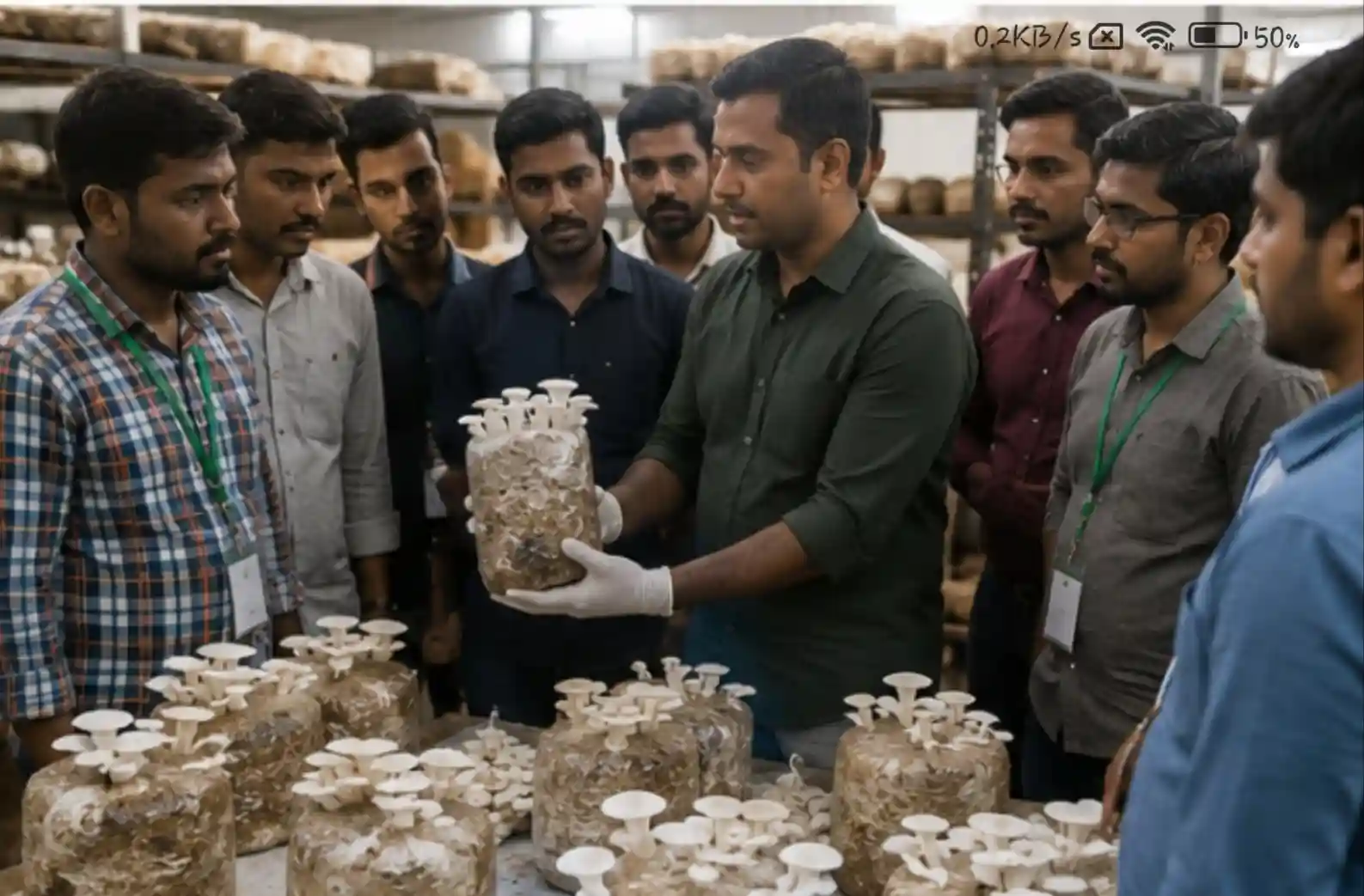
Precision button mushroom harvesting: gentle hand-twisting removal and stem trimming preserve pinhead clusters.
Quick Harvesting Takeaways for Commercial Growers
- Gentle Twisting: Safest removal technique to prevent leaving decaying stumps in the bed.
- Clean Knife Trimming: Cut only the dirty root base above a waste bucket, not on the casing layer.
- Intact Veil Stage: Harvest while the membrane beneath the cap is tight and fully intact.
- Rapid Cooling: Transfer mushrooms to 2°C–4°C immediately after picking to stop aging and bruising.
For anyone learning button mushroom farming, one practical question often comes up: Should button mushrooms be cut with a knife or gently twisted and removed by hand?
The answer depends on the harvesting method used on the farm, the maturity of the mushrooms, and the condition of the growing bed.
Button mushrooms (Agaricus bisporus) are commonly harvested by hand. Workers carefully remove mature mushrooms, trim the dirty stem base, and place the mushrooms into suitable containers. The aim is to obtain clean, marketable mushrooms while avoiding unnecessary disturbance to the casing layer and nearby developing pins.
In commercial button mushroom farming, harvesting is not simply about collecting the largest mushrooms. It is about selecting mushrooms at the correct stage, handling them gently, and preparing them for storage or sale without causing avoidable damage.
When Are Button Mushrooms Ready to Harvest?
Before learning how to cut button mushrooms, it is important to recognise the correct harvesting stage. Button mushrooms usually pass through several visible growth stages. Small pins develop into young mushrooms, which gradually increase in size as the cap expands.
For many fresh-market applications, button mushrooms are harvested while the cap is still rounded and the veil underneath remains intact. The ideal stage depends on the buyer's specifications, the intended market, and the variety being cultivated.
Signs That Button Mushrooms Are Ready
Look for these observable characteristics across the cultivation bed:
- Marketable Size: The cap has developed a suitable size (typically 35mm to 55mm for standard table buttons).
- Firm, Compact Appearance: The cap feels dense and resilient to the touch, not spongy or soft.
- Rounded Cap Contour: The cap remains spherical or cup-shaped rather than flattening or opening excessively.
- Intact Veil: The delicate veil beneath the cap covering the gills is intact or only beginning to stretch, ensuring white gills.
- Clean & Defect-Free: The mushroom is free from obvious bacterial blotch, dry bubble decay, or physical blemishes.
Smaller mushrooms may be harvested when the market requires a cocktail or button grade. Larger mushrooms may also be marketable, provided they meet the buyer's quality requirements.
Should You Cut or Twist Button Mushrooms?
One of the most frequently discussed questions in button mushroom harvesting is whether mushrooms should be cut with a knife or removed by twisting. Both methods can be used, but they serve slightly different purposes.
Hand-Twisting from Casing Layer
In many traditional and high-grade button mushroom harvesting operations, the mushroom is gently twisted and lifted clean from the casing layer.
- Identify a mature, firm button mushroom.
- Hold the mushroom gently without squeezing the cap.
- Rotate it carefully (quarter-turn) while lifting upward.
- Avoid pulling forcefully on nearby pins or mycelial cords.
- Inspect the base and surrounding growing surface.
- Remove loose casing debris from the harvest cavity.
Cutting Stem with a Harvesting Knife
A harvesting knife is indispensable when mushrooms need to be trimmed, or when a mechanical/shelf harvesting system utilizes clean cutting.
- Use a clean, sharp knife intended for food handling.
- Support the mushroom gently with fingers.
- Make a smooth, controlled horizontal cut on the stem.
- Avoid touching neighbouring mushrooms with the blade.
- Inspect the remaining stem base on the growing bed.
- Follow farm sanitation to manage remaining stumps.
| Factor | Gentle Twisting | Knife Cutting |
|---|---|---|
| Main Purpose | Removing mushroom intact from growing bed | Cutting stem or removing mushrooms in specific systems |
| Tool Requirement | Usually no knife for initial bed removal | Clean, sharp food-grade harvesting knife |
| Main Concern | Avoid excessive pulling or casing disturbance | Avoid poorly managed stumps decaying in the bed |
| Hygiene Practice | Sanitized hands and clean harvest gloves | Clean, sanitized knives and blades |
| Best Choice | Commercial hand picking with secondary root trimming | Shelf trimming and high-density dense flushes |
Which Method Is Better? For commercial button mushroom cultivation, the industry standard is a synchronized two-step action: workers twist the mushroom with one hand and immediately trim the dirty root end with a sharp harvesting knife held in the other hand directly over a trash chute. This avoids leaving rotting stumps on the bed while ensuring clean, soil-free produce.
Step-by-Step Guide: How to Harvest Button Mushrooms Correctly
A consistent harvesting routine helps maintain mushroom quality and makes it easier to separate marketable mushrooms from those that need additional growing time.
Step 1: Inspect the Growing Bed
Walk through the growing room aisles and identify individual mushrooms that have reached required maturity. Check for proper cap development, firmness, and absence of disease. Do not harvest every mushroom simply because it is growing beside a mature one—leave small pins to swell.
Step 2: Select the Correct Harvesting Method
Decide whether the mushroom should be removed by gentle twisting or harvested using the farm's approved cutting procedure. Avoid changing methods randomly so the casing surface remains uniform and protected.
Step 3: Handle the Cap Carefully
Button mushroom caps bruise easily with excessive pressure. Finger bruises oxidize into unsightly brown marks within hours. Hold the mushroom firmly by the cap with light, distributed fingertip pressure without squeezing.
Step 4: Remove the Mushroom Without Damaging Nearby Growth
Twist and lift carefully when using the hand-harvesting method. If using a knife, make a controlled cut and avoid contacting neighbouring mushrooms or pins. The casing layer should remain as intact as practical.
Step 5: Trim the Dirty Stem Base
Inspect the stem base immediately after lifting. Remove only the root-end carrying peat moss or casing soil with a swift, clean knife cut. Never slice off more edible stem than necessary. Drop the trimmed root into a separate waste pouch, never into the fresh mushroom punnet.
Step 6: Sort by Size and Quality
Place trimmed mushrooms directly into clean, food-safe plastic crates or consumer punnets. Grade into Small Buttons (cocktail), Medium Cups, and Large Open Cups according to buyer specifications. Keep blemished mushrooms in a separate B-grade container for processing.
Step 7: Move the Harvest to Post-Harvest Cold-Chain
Fresh button mushrooms are highly perishable and respire rapidly at ambient room temperature. Transfer harvested crates to a refrigerated cold storage room (2°C–4°C) within 30 to 45 minutes of picking to arrest cap opening, stem elongation, and moisture loss.
Which Knife Is Best for Button Mushroom Harvesting?
Choosing a suitable harvesting knife improves cutting control during trimming and reduces unnecessary damage to the mushroom stem. Look for these essential characteristics:
Razor-Sharp Stainless Steel Blade
A razor-sharp blade ensures a clean shear cut through fibrous stems without crushing cell walls or tearing edible tissue.
Easy-to-Sanitize Construction
Non-porous polypropylene or stainless steel handles withstand repeated dipping into chlorine or alcohol sanitizing baths.
Ergonomic Anti-Slip Grip
Harvesters make thousands of cuts daily in 85%+ relative humidity; a textured anti-slip handle prevents wrist fatigue and slips.
Compact Curved or Straight Blade (50–75mm)
Short, nimble blades maneuver easily around dense clusters of pinheads without nicking neighboring mushrooms.
Standard Operating Procedure: How to Clean a Mushroom Harvesting Knife
A harvesting knife should not be treated as clean simply because it looks clean. Prevent cross-contamination between rooms:
- Remove visible soil, peat, and organic matter with a clean brush.
- Wash the knife blade and handle with warm potable water and food-grade detergent.
- Immerse the blade in an approved food-contact sanitizer (e.g., 70% isopropyl alcohol or 100–200 ppm chlorine solution).
- Respect the required antimicrobial contact time (minimum 30–60 seconds).
- Allow the knife to air-dry on a sterile rack before beginning a new bed.
- Store securely in a dedicated sanitized pouch or wall sheath between harvesting sessions.
Common Mistakes When Cutting Button Mushrooms
Small errors during harvesting can dramatically reduce product grade, encourage post-harvest bacterial blotch, and harm second flush yields. Avoid these six common pitfalls:
1. Cutting Too Deep into the Growing Bed
Driving the knife blade into the casing soil tears underground mycelial runner hyphae and kills adjacent microscopic pinheads. Always cut above the casing layer.
2. Pulling Mushrooms Too Forcefully
Ripping mushrooms upward with brute force creates crater-like depressions in the casing soil, exposing uncolonized compost to green mold (Trichoderma).
3. Leaving Poorly Managed Stem Remnants
If cutting leaves thick stem stumps on the bed, dying tissue becomes a breeding ground for phorid/sciarid fly larvae and bacterial soft rot.
4. Touching Mushrooms with Dirty Hands or Trays
Fingers covered in wet casing peat transfer dark streaks directly onto clean white mushroom caps. Always keep picking hands and trimming hands dedicated.
5. Harvesting Too Late (Opened Veils)
Once the veil breaks, gills darken to pink and chocolate-brown, releasing spores, softening the cap, and dropping the market valuation by 30% to 50%.
6. Mixing Damaged Mushrooms with Premium Crates
A single bruised or diseased mushroom packed inside a 5kg crate can release enzymes and pathogens that degrade the entire package during transit.
Does Cutting Button Mushrooms Affect the Next Flush?
Button mushroom production commonly involves successive flushes (breaks), but harvesting technique alone does not determine how well the next flush develops. The condition of the compost nutrition, casing layer moisture, growing-room climate, crop health, and overall cultivation management all influence subsequent production.
Careless harvesting can disturb nearby pins or damage parts of the casing layer. On the other hand, careful harvesting helps preserve the growing surface and reduces avoidable mechanical damage.
Post-Harvest Bed Maintenance for Optimal Flush Cycling
Immediately after completing a flush harvest, follow these essential farm practices:
- Inspect and Clean the Bed: Remove aborted pins (dead heads) and dying mushrooms before they turn brown and attract flies.
- Manage Stem Remnants: Patch small cavities with a fresh handful of pasteurized, moist casing peat.
- Moisture Replenishment: Give light, gentle water sprays 24 hours post-harvest to restore moisture evaporated during the flush.
- Climate Reset: Maintain growing room air temperature around 16°C–18°C and relative humidity around 85–90% with steady CO2 air exchange.
How to Maintain Button Mushroom Quality After Harvesting
Harvesting is only one part of producing good-quality button mushrooms. Handling after harvest determines whether mushrooms reach consumers crisp, spotless, and white:
Avoid Excessive Handling
Pick directly into marketing punnets or clean shallow trays. Every time a button mushroom is transferred between crates, contact friction causes cap browning.
Keep Produce Dry (Never Soak)
Never wash fresh button mushrooms with water unless explicitly required for canning. Free water activates tyrosinase enzymes and ruins shelf life.
Rapid Cold-Chain Pre-Cooling
Cool fresh mushrooms down to 2°C to 4°C with forced-air cooling within 2 hours of harvest. Cold stops cap expansion and extends shelf life to 8–12 days.
Maintain Batch Traceability
Tag crates with room number, bed tier, harvest date, and picker ID. Traceability identifies handling flaws and ensures strict QA standards.
Button Mushroom Harvesting for Commercial Farms
Commercial mushroom facilities must strike an optimal balance between harvesting labor speed and produce quality. A fast harvester who bruises 15% of the crop or pulls up pin clusters costs the farm more in lost grade value than their speed saves in labor.
Standard Operating Procedure (SOP) Checklist for Commercial Picking
- Clear Maturity Standards: Visual grading charts posted at room entrances showing exact millimeter caps and veil grades.
- Two-Handed Coordination: Left hand twists and presents stem; right hand slices stem base directly over collection bag.
- Regular Knife Sanitation: Workers re-dip harvesting knives in disinfectant stations every 30 minutes or between tiers.
- Direct-to-Punnet Packing: Avoid bulk crate re-sorting by packing directly into retail punnets on weighing trolleys.
Frequently Asked Questions About Cutting Button Mushrooms
Expert answers to practical cultivation and harvesting questions from our agribusiness advisors:
Should button mushrooms be cut or twisted?
Button mushrooms are commonly removed by careful twisting and lifting from the casing layer, while knives are primarily useful for trimming the dirty root base and in specialized cutting systems. Follow the method appropriate for your growing bed and farm production procedure.
How do you cut button mushroom stems?
Use a clean, sharp food-grade knife to remove the soil-contaminated stem base with a swift, controlled cut. Avoid cutting into excessive edible tissue or driving the blade into the growing bed.
When should button mushrooms be harvested?
Harvest when mushrooms reach the size and maturity required by your market grade. For fresh-market button mushrooms, harvest while caps are firm, rounded, and the veil underneath remains tight and intact.
Can I use a normal kitchen knife for harvesting button mushrooms?
A suitable food-safe kitchen knife may be used if it is sharp, easy to clean, properly sanitized, and comfortable to handle. A specialized mushroom knife is not strictly mandatory, but cleanliness and blade sharpness are non-negotiable.
Does harvesting damage the next flush?
Careless harvesting with aggressive pulling can disturb nearby developing pins and dislodge the casing layer. Gentle, controlled harvesting protects the growing bed, while subsequent flush yield depends on overall compost nutrition, moisture, and climate management.
How should freshly harvested button mushrooms be stored?
Handle them gently, keep them completely dry without washing, cool them promptly in cold storage (2°C to 4°C at 85–90% RH), and pack them in breathable food-grade containers to prevent condensation.
Can button mushrooms be harvested at different sizes?
Yes. Button mushrooms can be harvested as button/closed cups, medium caps, or larger cups depending on buyer specifications and market demand. Because mushrooms mature at different rates across the bed, regular selective harvesting is standard practice.
How do commercial farms improve mushroom harvesting efficiency?
Commercial farms standardize clear maturity grading standards, train harvesters in gentle two-handed picking and trimming, sanitize cutting tools regularly, use ergonomic harvest trollies, and transition produce directly to post-harvest cold storage.
Conclusion: The Right Way to Cut Button Mushrooms
Learning how to cut button mushrooms correctly is an essential pillar of profitable mushroom cultivation, but successful harvesting involves much more than simply holding a knife.
The grower must recognise the correct maturity stage, remove mushrooms carefully without bruising, trim dirty stem bases over waste chutes, protect nearby pinhead clusters, maintain strict hygiene, and rapidly cool the crop.
The main objective is simple: harvest button mushrooms at the right stage, minimise physical damage, maintain cleanliness, and preserve the quality of the crop from the growing room to the customer.
Published by Organic Mushroom Farm Agronomy Team
Reviewed by Certified Cultivators & Commercial Turnkey Consultants. ISO-compliant SOPs and practical guidance.