Air Conditioning for Mushroom Farming: How to Choose the Right AC for a Mushroom Growing Room
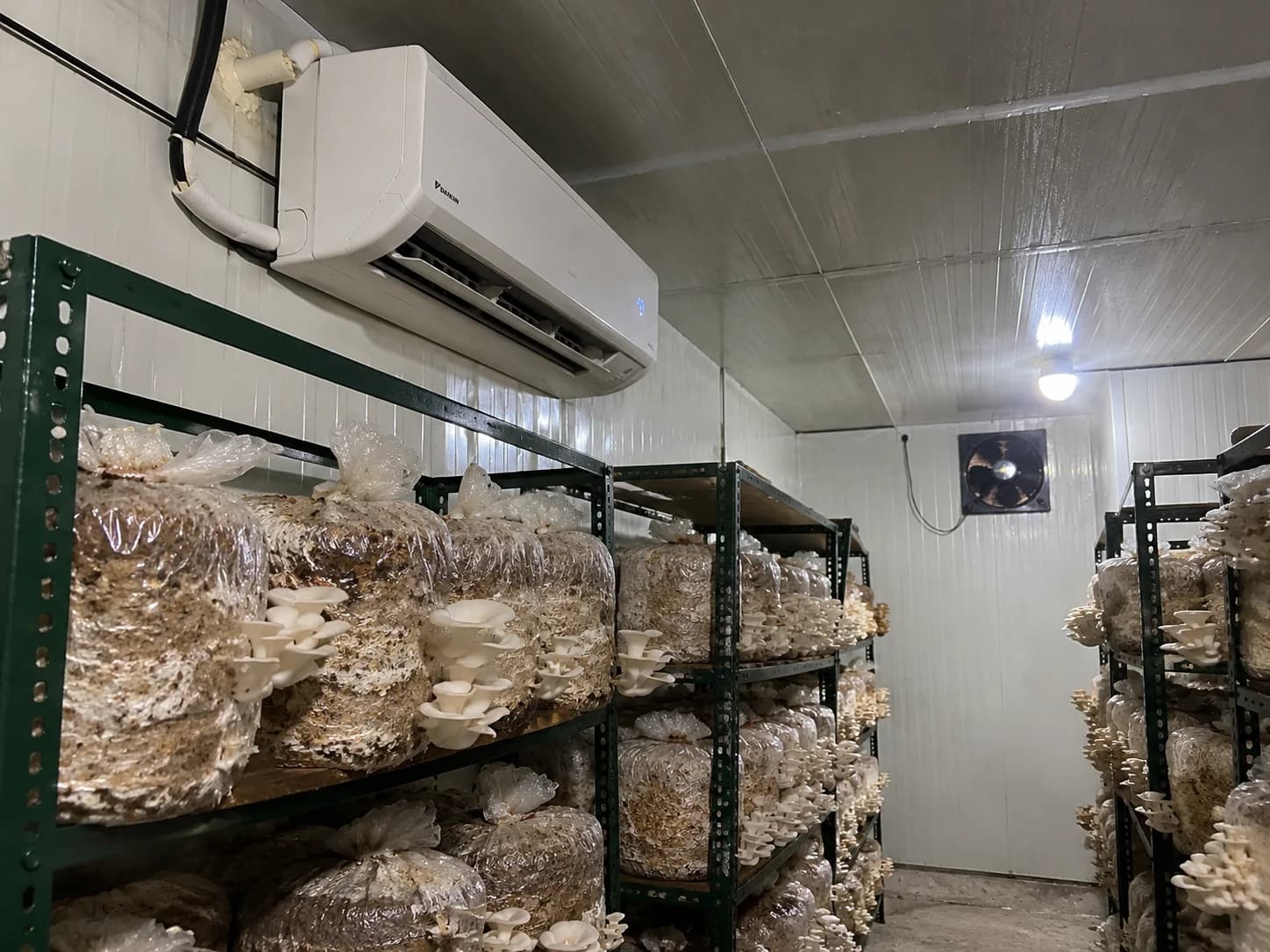
Maintaining the right temperature inside a mushroom growing room is one of the most important aspects of controlled-environment mushroom cultivation. Whether you are setting up a small oyster mushroom unit or planning a commercial mushroom farm, your cooling system can influence crop development, energy consumption, operating costs, and production consistency.
However, selecting an air conditioner for mushroom farming is not as simple as purchasing a unit based on room size. Mushroom cultivation rooms have different requirements from ordinary bedrooms, shops, and offices. The growing substrate, number of cultivation bags, room insulation, outdoor climate, ventilation rate, and heat released by equipment can all influence the actual cooling load.
The most suitable AC for a mushroom growing room is the one that can maintain the required temperature under real operating conditions—not simply the one with the highest tonnage.
This guide explains how air conditioning works in mushroom cultivation, how to estimate cooling requirements, what to consider when choosing an AC, and which mistakes to avoid when planning a mushroom farm cooling system.
1Why Is Air Conditioning Important in Mushroom Farming?
Mushrooms do not respond to temperature in the same way throughout their life cycle. Different species and growth stages require different environmental conditions.
An air conditioning system helps growers maintain a more stable temperature when outdoor conditions become too hot for the selected mushroom variety or production stage.
For example, oyster mushroom cultivation may require different temperature conditions depending on the species or strain. Button mushroom production has its own temperature requirements, particularly during the transition from spawn running to fruiting.
Without suitable temperature control, a growing room may experience excessive heat, uneven growth, or conditions that are unsuitable for the crop.
A properly designed mushroom room air conditioning system can help with:
- Maintaining the target cultivation temperature.
- Reducing temperature fluctuations during hot weather.
- Supporting more consistent conditions across growing racks.
- Managing heat generated by cultivation bags and equipment.
- Improving environmental control in insulated growing rooms.
- Making production planning more predictable.
Air conditioning alone, however, cannot control every environmental parameter. Humidity, fresh air exchange, carbon dioxide concentration, and hygiene must also be managed according to the mushroom variety and its growth stage.
2Which Type of AC Is Suitable for a Mushroom Growing Room?
Choosing an AC for a mushroom farm depends on the room's size, insulation, production capacity, and operating schedule. There is no single air conditioner that is ideal for every mushroom cultivation unit.
Split AC for Small Mushroom Farms
A conventional split air conditioner may be suitable for a small, properly insulated mushroom growing room if its cooling capacity and operating characteristics meet the actual requirements.
Potential advantages include:
- Relatively straightforward installation.
- Availability in different cooling capacities.
- Convenient temperature adjustment.
- Suitability for some small-scale cultivation applications.
Before installing a split AC, consider the high humidity often present in mushroom cultivation rooms. Moisture exposure, condensation, corrosion, drainage, electrical safety, and the suitability of indoor-unit components require careful evaluation. A residential AC should not automatically be assumed to be suitable for continuous operation in a humid agricultural environment.
Commercial AC Systems for Larger Mushroom Farms
Larger cultivation facilities may require commercial air conditioning equipment designed for greater cooling loads and longer operating periods.
Depending on the application, options may include commercial split systems, ducted systems, packaged units, or other engineered cooling arrangements.
A commercial mushroom farm may also need to account for heat entering through walls and ceilings, frequent door opening, fresh air requirements, and heat generated inside the cultivation room. The right choice should be based on a cooling-load calculation rather than a general recommendation based only on floor area.
How Should You Choose?
Before purchasing an air conditioner for mushroom cultivation, establish:
- The required temperature range for your mushroom variety.
- The room's internal dimensions.
- The insulation quality of walls, ceiling, and doors.
- The number of cultivation bags and expected biological heat load.
- The fresh air exchange requirements.
- The local summer design temperature.
- The expected operating hours and electrical supply.
These factors help determine whether a standard split AC is adequate or a commercial system is more appropriate.
3How to Calculate AC Capacity for a Mushroom Growing Room
One of the most common questions among new growers is: How many tons of AC are required for a mushroom growing room?
The answer depends on the room's total cooling load. Air conditioning capacity is commonly expressed in BTU/h, kilowatts of cooling, or tons of refrigeration. One ton of refrigeration is approximately 3.517 kW of cooling capacity.
The cooling load may include several components:
- Heat passing through insulated walls and the ceiling.
- Heat entering through doors and air leakage.
- Heat introduced by fresh air.
- Heat released by lights, fans, and other equipment.
- Heat generated by the mushroom substrate and growing bags.
- Heat from workers and other activities inside the room.
Example: A Small Mushroom Cultivation Room
Imagine a growing room measuring 10 ft × 12 ft × 10 ft. Its floor area is 120 square feet, but floor area alone is not enough to determine the correct AC size.
Two rooms with identical dimensions may require significantly different cooling capacities if one has well-insulated sandwich panels and the other has a poorly insulated brick roof exposed to direct sunlight.
The number of cultivation bags and the required fresh air exchange can also change the cooling load. For this reason, avoid choosing a 1-ton, 1.5-ton, or 2-ton AC simply by copying another farmer's installation.
Recommended approach: Have the room's sensible and latent cooling loads evaluated under the intended operating conditions. Select equipment that can handle the calculated load while maintaining the required temperature and humidity.
Oversized equipment can also cause problems. Depending on the system, it may cycle frequently, control temperature unevenly, or remove moisture differently from what the cultivation room requires.
4How Much Temperature Control Do Different Mushroom Varieties Need?
Different mushroom species have different environmental requirements. The temperature needed during vegetative growth may also differ from the temperature needed for fruiting.
The following table provides general orientation rather than universal operating specifications.
| Mushroom variety | Temperature-control consideration |
|---|---|
| Oyster mushroom | Requirements vary considerably by species and strain. |
| Button mushroom | Requires stage-specific temperature management during compost colonisation and fruiting. |
| Milky mushroom | Generally associated with warmer cultivation conditions than many cool-weather oyster strains. |
| Shiitake | Requirements depend on strain, substrate, and cultivation stage. |
| Lion's Mane | Environmental requirements vary by strain and production method. |
For commercial cultivation, follow the production specifications for your selected strain and growing method. An AC that works well for a cool-weather oyster mushroom strain may not be the most efficient choice for a warm-weather species. Likewise, button mushroom cultivation should not be managed using a temperature setting copied from an oyster mushroom room.
The correct AC setting is determined by the mushroom species, production stage, and measured room conditions.
5Does a Normal Split AC Work for Mushroom Cultivation?
A normal split AC can work in some small mushroom growing rooms, but it is not automatically the right choice for every farm.
A typical residential air conditioner is designed primarily for human comfort. A mushroom cultivation room may have high humidity, frequent air exchange, and continuous operating requirements that differ from those in a home.
Before using a standard split AC, evaluate the following:
If a standard split AC is selected, the installation should be assessed for the humidity and operating conditions expected in the cultivation room. For larger commercial facilities, professional HVAC design may provide better control over temperature distribution, ventilation, and system operation.
6Why Does an AC Sometimes Fail to Maintain Mushroom Room Temperature?
A common problem in mushroom farming is an AC that runs for long periods but cannot maintain the desired temperature.
This does not necessarily mean that the air conditioner is defective. The underlying problem may be the room design or an underestimated cooling load.
Poor Insulation
Heat entering through an exposed roof or inadequately insulated walls can increase the cooling demand substantially. A properly insulated cultivation room helps reduce heat transfer and makes temperature control more manageable.
Excessive Fresh Air Intake
Fresh air is important for managing carbon dioxide, but outside air may be hot and humid. When warm outdoor air enters the room, the cooling system must handle the additional sensible and latent heat load. Ventilation should therefore be designed alongside the air conditioning system.
Too Many Cultivation Bags
As the number of cultivation bags increases, the room's biological heat load may also increase, particularly during active substrate colonisation. A cooling system designed for an empty room may not perform adequately once the room is fully loaded.
Poor Air Circulation
Even when the AC has sufficient capacity, its cooling may not be distributed evenly. One section of a rack may remain warm while another receives excessive direct airflow. Temperature sensors placed at representative locations can help identify these differences.
Dirty Filters or Restricted Airflow
Blocked filters, dirty coils, and restricted airflow can reduce cooling performance. Regular maintenance helps the equipment operate as intended.
7How Room Insulation Affects AC Electricity Consumption
Insulation is an important part of planning an energy-efficient mushroom farm. A well-insulated room reduces heat entering from the external environment. This can reduce the cooling load and allow the AC to operate more efficiently.
For commercial mushroom cultivation, consider:
- Insulated wall and ceiling panels.
- Properly sealed doors.
- Reduced uncontrolled air leakage.
- Appropriate sealing around pipes and electrical penetrations.
- Thermal bridges around structural components.
- The effect of direct solar exposure on the building.
However, insulation should not be treated as a replacement for ventilation. A cultivation room needs a controlled approach to fresh air, carbon dioxide management, and humidity. The goal is to reduce unnecessary heat gain while maintaining suitable conditions for mushroom growth.
How to Estimate AC Running Costs
The following simplified formula can help estimate electricity consumption:
For example: If an AC averages 1.2 kW of electrical input over 10 hours, its estimated consumption during that period is 12 kWh.
Actual consumption varies with cooling demand, outdoor temperature, thermostat settings, equipment efficiency, and compressor operation. To estimate operating costs, multiply the expected electricity consumption by your applicable electricity tariff. Remember that an AC's cooling capacity is not the same as its electrical power consumption.
8Where Should the AC Indoor Unit Be Installed?
Indoor-unit placement affects temperature distribution and the movement of cooled air. In a mushroom growing room, installation should account for the rack layout, ceiling height, cultivation bags, sensor positions, and required air movement.
Consider these principles:
- Avoid directing excessively cold air continuously onto sensitive growing areas.
- Check temperature at multiple rack levels.
- Ensure that air can circulate around cultivation bags.
- Keep the indoor unit accessible for maintenance.
- Provide suitable drainage for condensate.
- Avoid placing sensors directly in the AC's discharge airflow.
The best location depends on the room geometry and the selected system. For larger growing rooms, engineered air distribution may be more effective than relying on a single wall-mounted indoor unit.
9Common AC Installation Mistakes in Mushroom Farms
Several avoidable mistakes can increase operating costs or make temperature control difficult:
Mistake 1: Selecting AC capacity by floor area alone.
A cooling-load calculation should account for insulation, outdoor conditions, ventilation, equipment, and biological heat.
Mistake 2: Ignoring the mushroom variety.
Temperature requirements vary by species and cultivation stage.
Mistake 3: Overlooking humidity exposure.
The equipment and electrical installation must be suitable for the actual environment.
Mistake 4: Sealing the room without planning ventilation.
Temperature control must be balanced with fresh air and carbon dioxide requirements.
Mistake 5: Ignoring sensor placement.
A single sensor near the AC may not represent the conditions experienced by mushrooms across the room.
Mistake 6: Assuming a larger AC is always better.
Oversizing may lead to poor control or unnecessary expense, depending on the equipment and load.
Mistake 7: Neglecting maintenance.
Dirty filters, restricted airflow, drainage issues, and refrigerant-system faults can affect performance.
A well-planned installation begins with understanding the cultivation process and the building, rather than buying equipment first and attempting to adapt the farm around it.
10Is AC Necessary for Every Mushroom Farm?
No. Whether air conditioning is necessary depends on the mushroom variety, climate, growing season, production method, and target temperature.
Some growers may achieve suitable conditions through seasonal cultivation, passive temperature management, insulation, and controlled ventilation. Other farms, particularly those operating in hot climates or targeting consistent year-round production, may require mechanical cooling.
The decision should be based on the difference between the required growing conditions and the environmental conditions available at the farm.
Before investing in an AC system, assess:
- The local climate during the intended production period.
- The temperature requirements of the selected mushroom strain.
- Whether the room can maintain suitable conditions without mechanical cooling.
- The cost of electricity and equipment.
- The expected production schedule.
- The potential value of more consistent environmental control.
For a commercial mushroom farm, the objective is not simply to install an AC. It is to establish an environment that supports the intended production method at a manageable operating cost.
11A Practical Checklist Before Buying an AC for Mushroom Farming
Use this checklist before finalising an air conditioning purchase:
| Requirement | What to verify |
|---|---|
| Room dimensions | Length, width, height, and total volume |
| Insulation | Wall, roof, floor, and door construction |
| Mushroom variety | Species, strain, and cultivation stage |
| Production load | Number of bags and expected substrate heat |
| Ventilation | Required fresh air and carbon dioxide control |
| Climate | Outdoor design temperature and humidity |
| Cooling capacity | Calculated total cooling load |
| Electrical supply | Available power and installation requirements |
| Temperature monitoring | Sensors placed at representative growing locations |
| Maintenance | Filter access, coil cleaning, and condensate drainage |
| Operating cost | Estimated electricity use and tariff |
This checklist helps growers compare equipment based on their actual needs instead of relying only on product descriptions or another farm's installation.
12Frequently Asked Questions About AC for Mushroom Farming
Which AC is best for mushroom farming?
The best AC depends on room size, insulation, cultivation load, humidity exposure, ventilation, and the temperature requirements of the mushroom variety. Small growing rooms may use suitable split AC systems, while larger facilities may need professionally designed commercial HVAC equipment.
How many tons of AC are required for a mushroom growing room?
There is no universal tonnage requirement. Cooling capacity should be calculated using the room's dimensions, insulation, outdoor climate, fresh air intake, equipment heat, and biological heat from cultivation bags.
Can I use a 1.5-ton split AC for oyster mushroom farming?
It may be suitable for some small, well-insulated rooms, but the tonnage alone cannot establish suitability. Calculate the cooling load and verify that the equipment can maintain the required conditions during peak heat.
Does mushroom cultivation require continuous AC operation?
Not every mushroom farm needs continuous air conditioning. Operating requirements depend on the species, climate, room design, and cultivation stage. Some facilities require extended cooling periods, while others can maintain suitable conditions with less mechanical cooling.
Can AC control humidity in a mushroom room?
An air conditioner may remove moisture from the air under certain conditions, but it does not provide precise humidity control in every application. Mushroom cultivation may require separate humidity monitoring and management.
Why is my mushroom room still hot when the AC is running?
Possible causes include insufficient cooling capacity, poor insulation, excessive fresh air intake, biological heat from cultivation bags, restricted airflow, dirty coils, or uneven air distribution.
Is commercial air conditioning worth the investment for mushroom farming?
It can be worthwhile when stable temperatures are necessary for the intended production schedule. The decision should consider capital cost, electricity consumption, expected production benefits, and the local climate.
Conclusion
Air conditioning for mushroom farming should be planned as part of the complete growing-room design. Room insulation, cooling capacity, ventilation, humidity, biological heat, and temperature monitoring all influence how effectively the system performs.
For small-scale growers, a properly selected split AC may be sufficient in suitable conditions. Larger commercial mushroom farms may benefit from a professionally engineered cooling arrangement designed around their production requirements.
Before choosing an AC, calculate the cooling load, identify the temperature needs of the mushroom variety, and evaluate the conditions the system will encounter during operation.
The most effective mushroom farm cooling strategy is one that supports consistent cultivation conditions without creating unnecessary energy costs.
Recommended Cultivation & Setup Guides
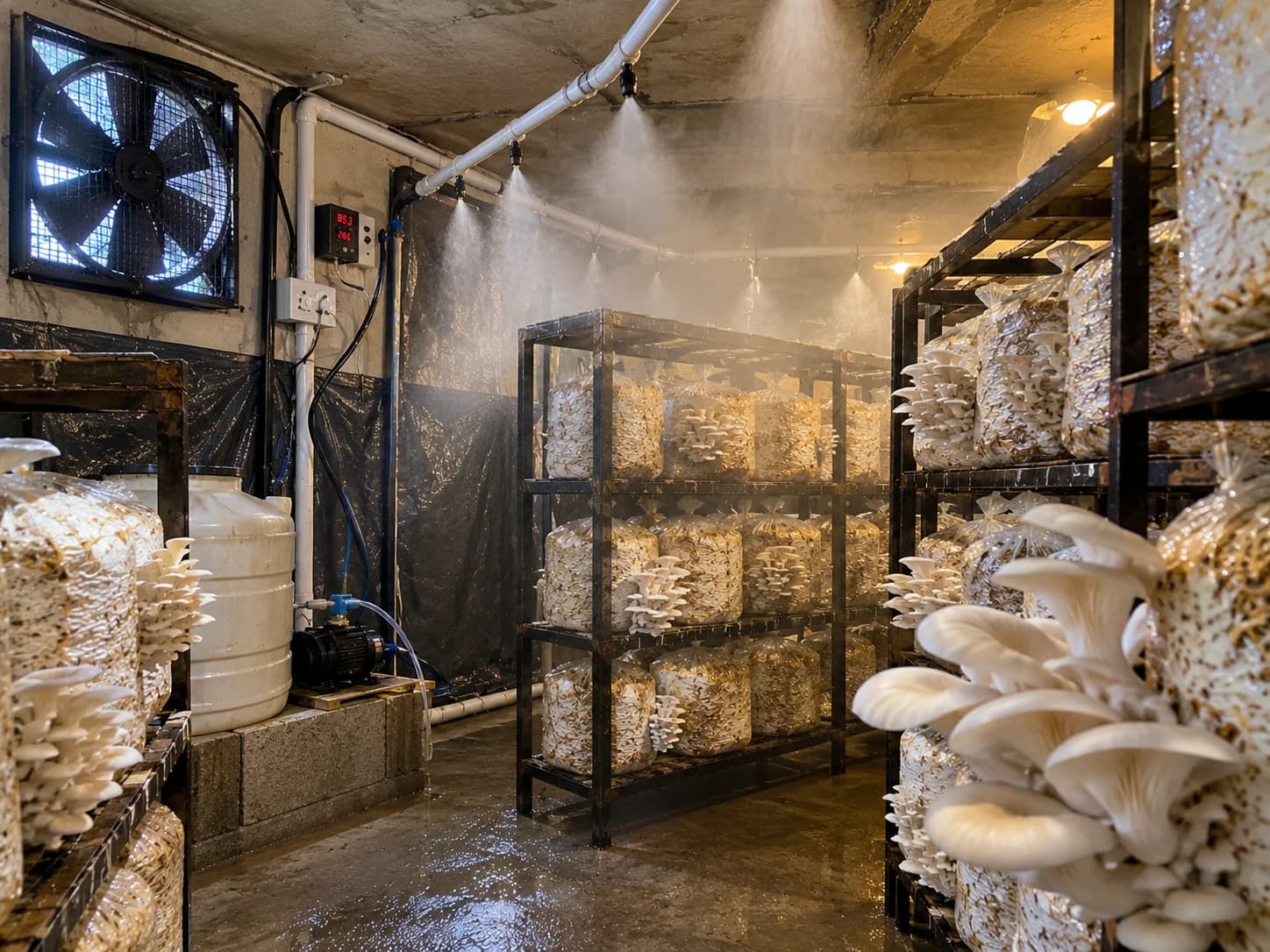
How to Grow Mushrooms at Home: A Complete Step-by-Step Guide for Beginners
Learn how to grow mushrooms at home using simple methods, mushroom spawn, straw, and grow bags. Discover humidity control, mist makers, foggers, common mistakes, and harvesting tips.
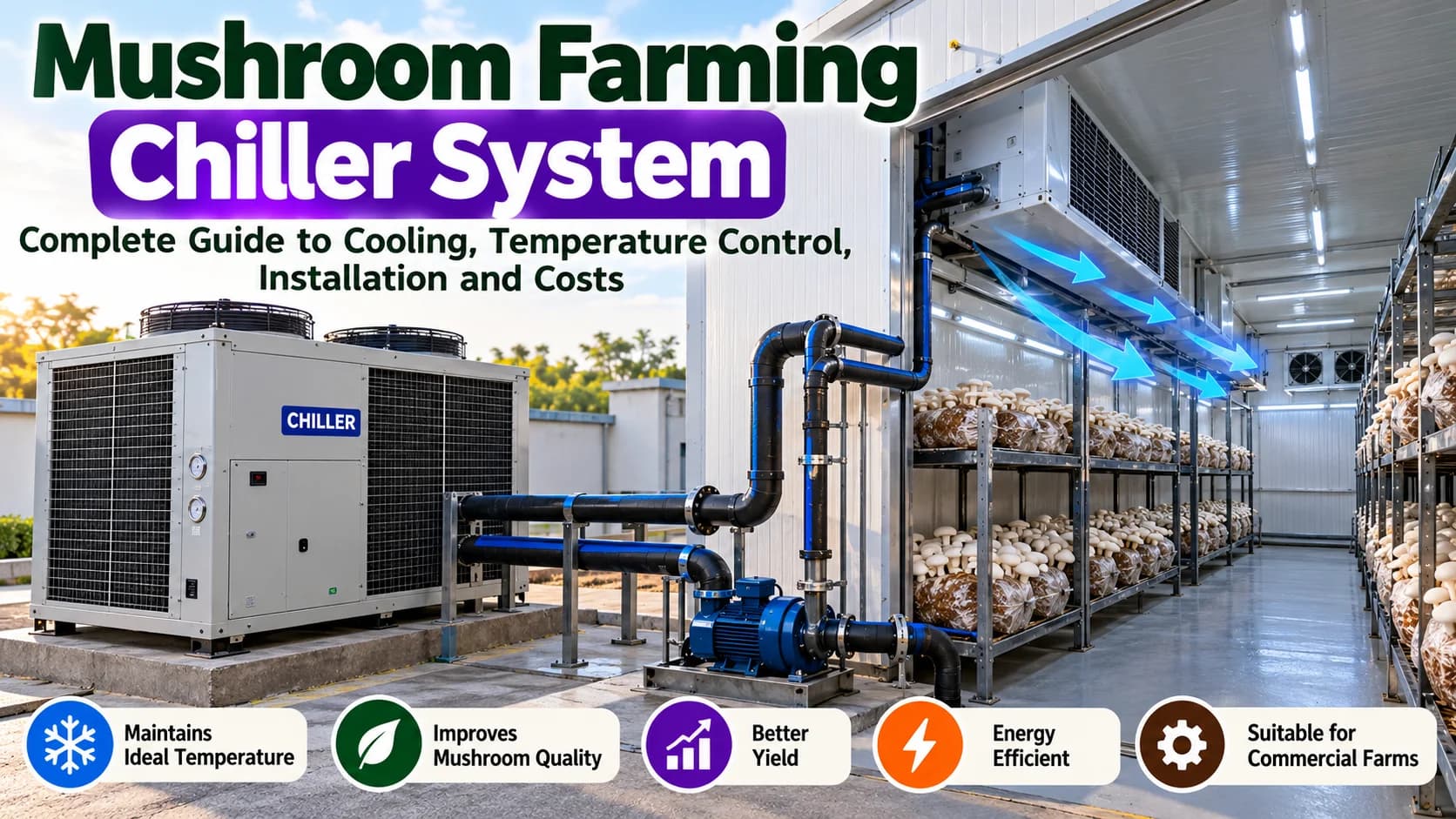
Mushroom Farming Chiller System: Complete Guide to Cooling, Temperature Control, Installation and Costs
Complete technical guide to mushroom farming chillers: air-cooled vs water-cooled, cooling load calculations, button mushroom temperature control, electricity consumption, and setup costs.
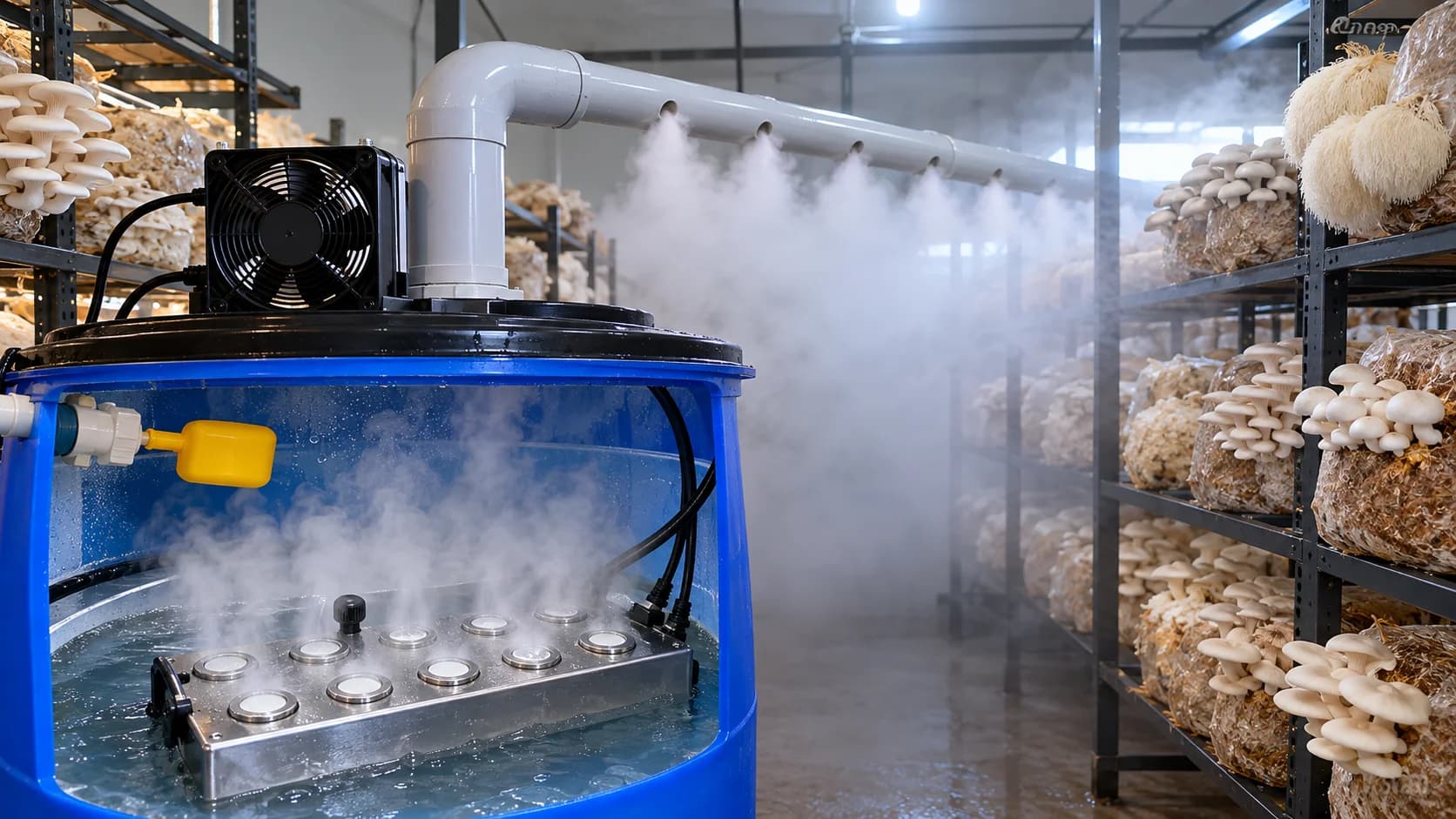
Ultrasonic Mist Maker for Mushroom Farming: How It Works, DIY Setup, Automation and Troubleshooting
Complete guide to ultrasonic mist makers for mushroom cultivation: piezoelectric ceramic disc vibration, 10-12 head mist plates, DIY drum humidifier assembly, humidity controller automation, and troubleshooting.
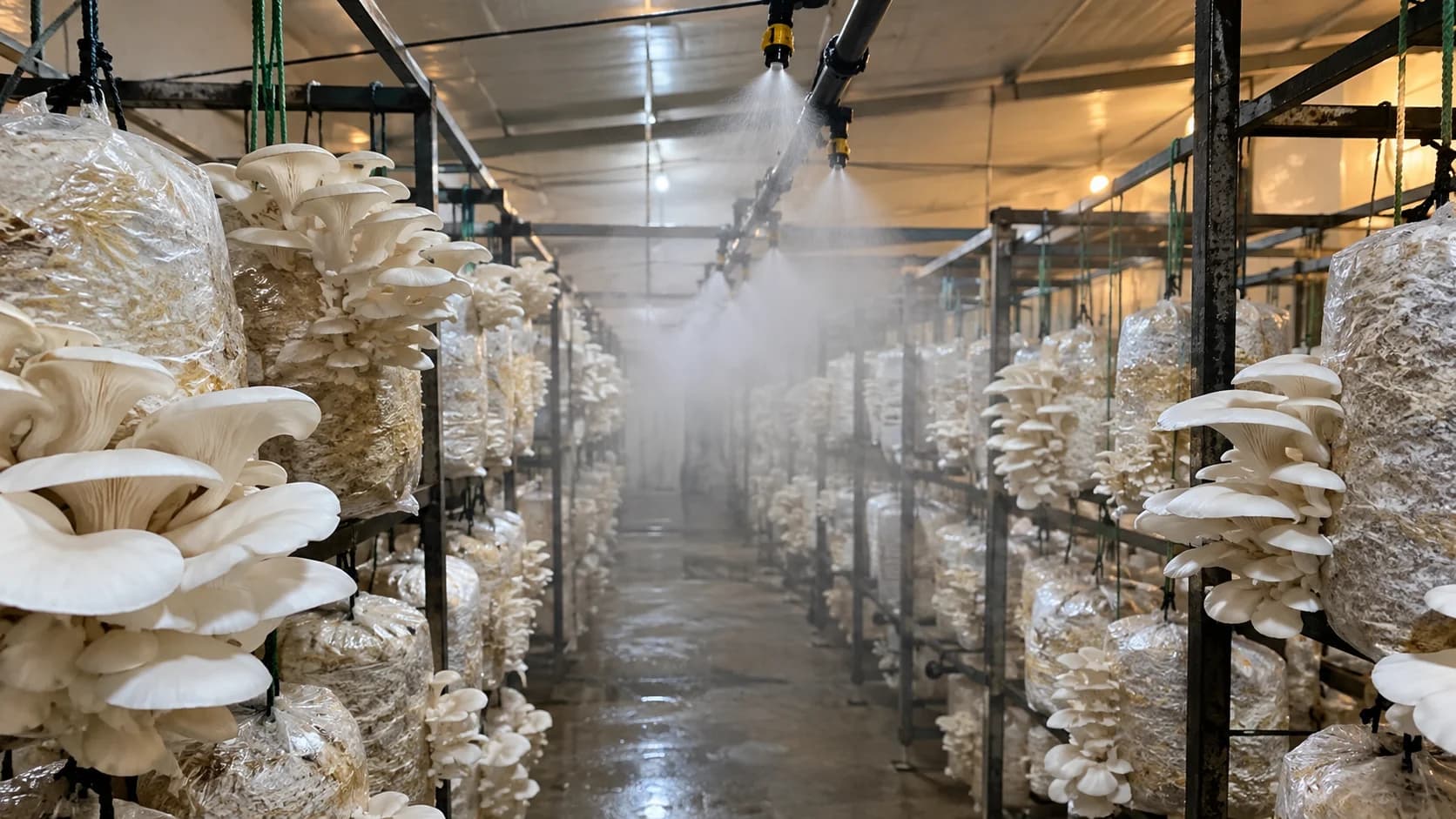
Mushroom Farming Mein Fogger System Ki Puri Jankari: Sahi Selection, Automatic Setup Aur Troubleshooting Guide
Mushroom farming mein fogger kya hai, kaise kaam karta hai aur kaunsa lagayein? Janiye 4-way nozzle, high-pressure pump, automatic humidity controller, timer setup, price aur nozzle choking thik karne ka pura tarika.