San Diego Indoor Mushroom Farming: A Practical Guide to Building Your Own Farm
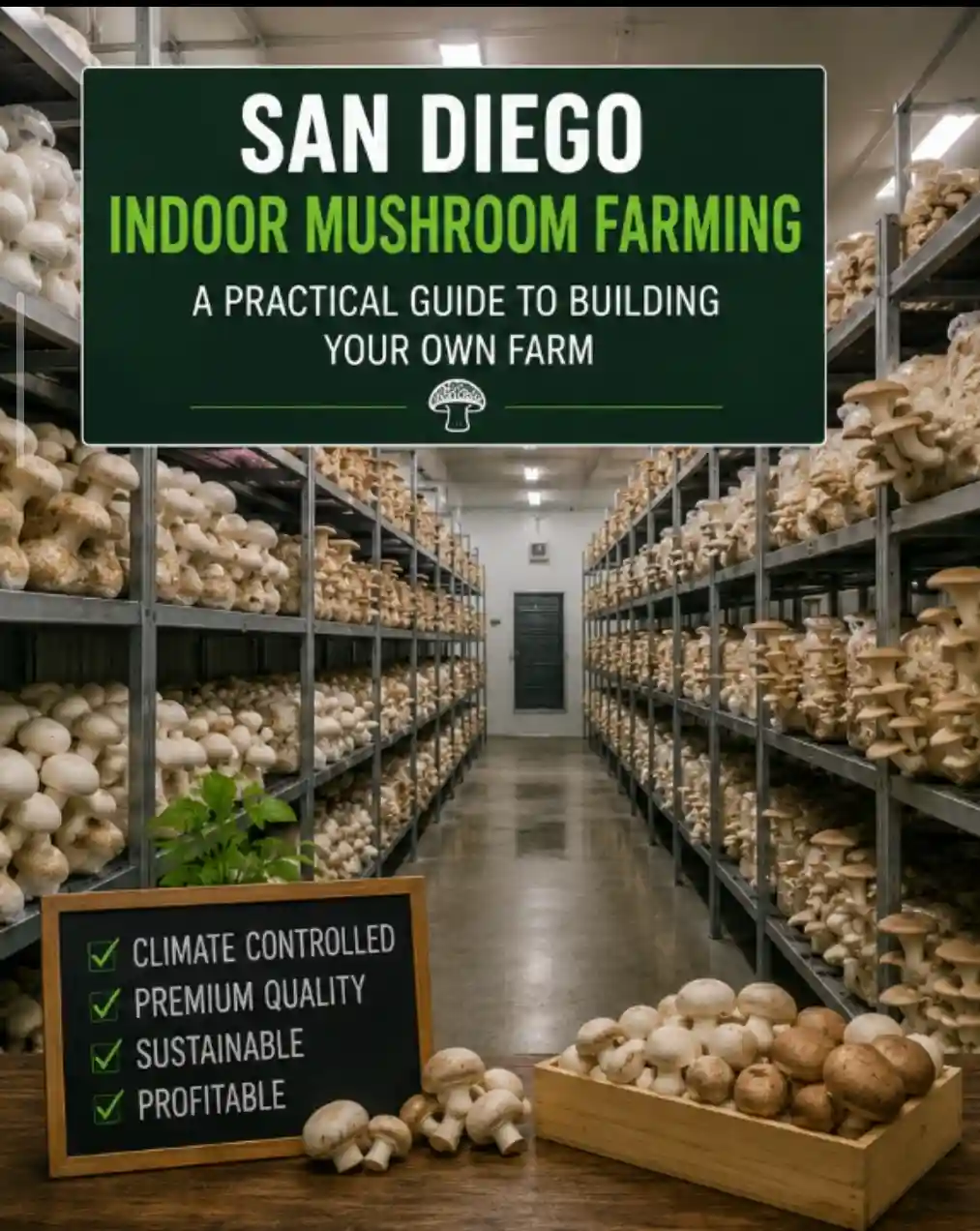
A climate-controlled indoor mushroom farm setup designed for commercial mushroom cultivation in San Diego County.
The San Diego County Agribusiness Boom
San Diego County is famous for its thriving agricultural scene, farm-to-table restaurants, and year-round organic farmer’s markets. While avocados and citrus have traditionally dominated areas like Fallbrook, Carlsbad, Encinitas, and Vista, a new, highly profitable agricultural trend is taking over: indoor organic mushroom farming.
Whether you live in the breezy coastal neighborhoods of Del Mar or the warmer inland valleys of Escondido, growing high-value specialty crops like Oyster, Shiitake, and Button mushrooms is an incredible business opportunity. Because mushrooms are grown indoors under controlled climates, you do not need acres of expensive California farmland. A spare garage in San Marcos or a small basement in Chula Vista is more than enough to launch a commercial mushroom cultivation business.
In this comprehensive guide, we will explore exactly how you can set up a low-cost, high-yield indoor mushroom grow room tailored to Southern California's unique climate.
1. Why Indoor Mushroom Cultivation is Perfect for Southern California
Unlike traditional crops that rely on rainfall and sunlight, mushrooms thrive in dark, humid, and temperature-controlled environments. By building an indoor fruiting chamber, local growers can bypass the region's dry Santa Ana winds and occasional heatwaves.
- Drought-Resistant Farming: California constantly faces water restrictions. Indoor mushroom farming uses up to 90% less water than traditional soil-based agriculture.
- High Profit Margins Per Square Foot: You can stack vertical shelving in a 10x10 foot spare room and produce hundreds of pounds of gourmet mushrooms every month to sell to local restaurants in Downtown San Diego or La Jolla.
- Rapid Growth Cycles: Varieties like the Pink Oyster or Blue Oyster mushroom can go from substrate to harvest in just 3 to 4 weeks.
2. Setting Up Your Climate-Controlled Grow Room
To successfully grow mushrooms in dry areas like Vista or Fallbrook, you need to trick the fungi into thinking they are in a damp, autumn forest. Here is the essential equipment you need for your home scale or commercial farm setup:
Humidity and Moisture Control
Mushrooms require 80% to 95% relative humidity. In San Diego, natural humidity rarely stays this high.
- Ultrasonic Foggers: Connect a commercial humidifier or ultrasonic fogger to a digital humidistat. This automated system will release fine mist into the air whenever the room gets too dry.
- Waterproof Surfaces: Line your grow tent or room with heavy-duty plastic sheeting to prevent mold on your drywall.
Temperature and Fresh Air Exchange (FAE)
- HVAC Systems: Most gourmet mushrooms fruit best between 60°F and 75°F. A simple mini-split AC unit ensures your room stays cool during hot California summers.
- Exhaust Fans: Mushrooms inhale oxygen and exhale carbon dioxide (CO2). If CO2 builds up, your mushrooms will grow deformed. Install an inline exhaust fan with a HEPA filter to pull in clean, fresh oxygen while expelling stale air.
3. Best Mushroom Varieties for Local Markets
Choosing the right spawn (mushroom seeds) is critical. Here are the most profitable varieties for local California growers:
- Oyster Mushrooms: (Pearl, Blue, and Golden Oysters). These are incredibly resilient, grow rapidly, and are in high demand at local vegan cafes and organic grocery stores.
- Button and Cremini Mushrooms: The staple of American cooking. These require a specific compost-based substrate but offer a massive, guaranteed wholesale market.
- Milky Mushrooms: Ideal if you are growing in warmer inland areas like El Cajon without heavy air conditioning, as they prefer higher temperatures.
4. Substrate Preparation and Sterilization
Mushrooms do not grow in dirt; they grow in organic matter called substrate. In San Diego County, you can easily source local agricultural waste like hardwood sawdust, wheat straw, or coffee grounds from local cafes.
To prevent green mold or bacterial blotch, you must sterilize or pasteurize your substrate using a steam barrel or pressure cooker before packing your grow bags. Proper hygiene is the secret to a high-yielding crop.
Frequently Asked Questions (FAQs) About Mushroom Farming
Q1: How much money do I need to start a small mushroom farm in my garage?
Starting a home-scale mushroom grow room is surprisingly affordable. You can set up a basic grow tent, a simple humidifier, exhaust fans, and initial substrate/spawn for under $500. Commercial setups with automated HVAC and vertical racking will require a larger investment but offer significantly higher returns.
Q2: Do I need special permits to grow and sell mushrooms in California?
For small-scale sales at local farmer's markets (like the Little Italy Mercato or Vista Farmer's Market), you typically need a standard business license and a Certified Producer's Certificate (CPC) from the county agricultural commissioner.
Q3: Can I grow mushrooms year-round in hot climates?
Yes! Because you are growing indoors, outside weather does not matter. By using proper insulation and a mini-split AC, you can maintain the perfect 65°F environment for Oyster mushrooms 365 days a year.
Q4: How do I find buyers for my gourmet mushrooms?
The demand in Southern California is huge. Start by bringing fresh samples to local farm-to-table chefs, joining community-supported agriculture (CSA) boxes, and setting up a booth at weekend farmer's markets in Encinitas or Carlsbad.
Q5: What is the biggest challenge for beginner mushroom growers?
Contamination is the biggest hurdle. If your sterilization process is weak, aggressive green mold (Trichoderma) can ruin your harvest. Proper training in sterile lab techniques and clean room protocols is highly recommended before you start.
Q6: What is the best substrate for Oyster mushrooms?
Oyster mushrooms are aggressive colonizers and grow beautifully on pasteurized wheat straw, hardwood sawdust, or even sterilized cardboard and coffee grounds.
Q7: How can I learn the step-by-step process of commercial cultivation?
Trial and error in mushroom farming can lead to expensive crop failures. Learning from experts is the fastest way to profitability.
Turn Your Space Into a Highly Profitable Business Today!
Are you ready to start your own indoor mushroom farm in San Diego, or anywhere else in the world? We provide comprehensive, step-by-step Mushroom Farming Training Programs tailored for both hobbyists and serious entrepreneurs.
Our globally recognized online courses will teach you the exact commercial methodologies for climate automation, substrate formulation, disease management, and marketing strategies.
Perfect for beginners setting up their first home grow tent.
Our best-selling blueprint for entrepreneurs looking to build a large-scale, automated indoor farm and dominate local wholesale markets.