How Youth & Homemakers in Shahdara, Yamuna Vihar & Karawal Nagar Are Running ₹30,000/Month Mushroom Units on a ₹5,000 Starter Budget
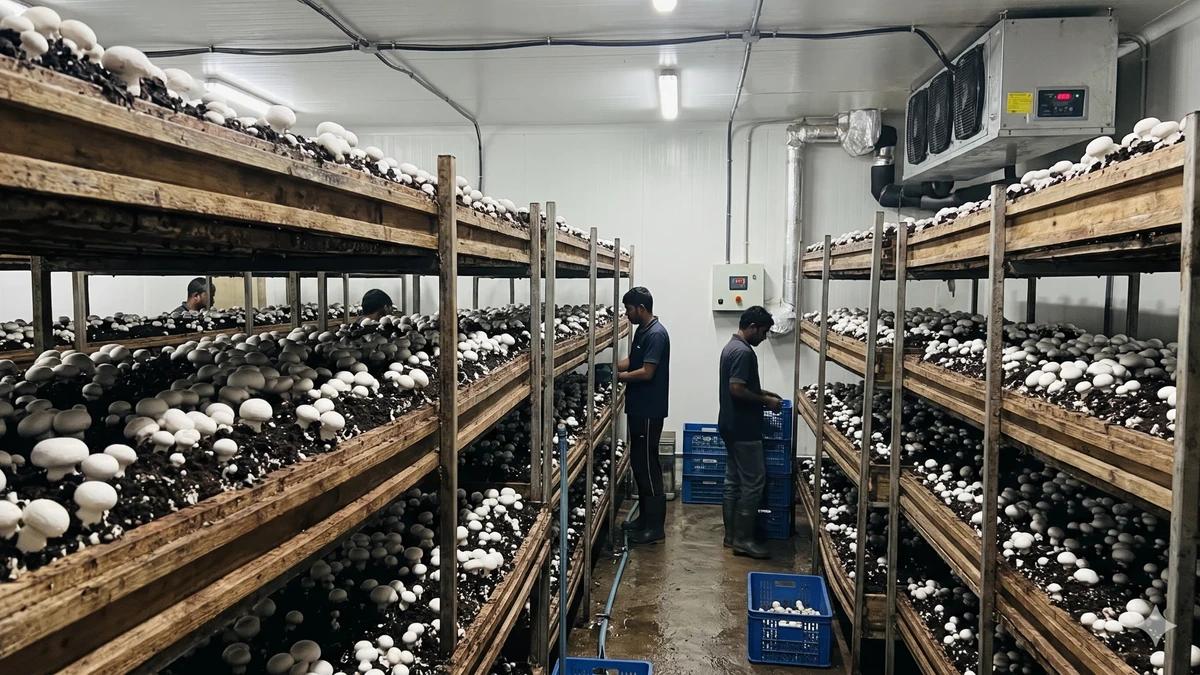
Take a ride along Wazirabad Road from Bhajanpura, Yamuna Vihar, Khajuri Khas, Karawal Nagar, and Sonia Vihar, or cross the railway line toward Shahdara, Rohtash Nagar, Babarpur, Maujpur, Nand Nagri, Dilshad Garden, and Vivek Vihar. North-East Delhi and the Shahdara district represent the most hardworking, self-made micro-business belt in the capital.
Here, thousands of families run small home-based manufacturing units, garment workshops, or retail shops right from their ground floors or top-floor rooms. When young job seekers, college students, and homemakers from Shahdara, Yamuna Vihar, or Karawal Nagar call us to join our Certified Mushroom Training Course, they don't want fancy ₹10-lakh corporate presentations. They ask sharp, money-conscious questions:
“Sir, our top-floor room in Karawal Nagar/Gokulpuri has a T-iron stone slab (Tukdi) or tin roof—can we grow mushrooms there without expensive ceiling insulation?”
“Last winter I filled 30 Oyster mushroom bags at home in Bhajanpura, and half the mushrooms sprouted INSIDE the plastic bag and rotted instead of coming out through the holes—what did I do wrong?”
“Can I really start with just ₹5,000, and where will I sell premium mushrooms near Shahdara or Dilshad Garden?”
The ground reality is that North-East Delhi has the lowest startup cost in all of Delhi (cheap room rents in Sonia Vihar, Karawal Nagar, and Loni border, plus wholesale raw material access in Shahdara and Mandoli) paired with affluent buyer hubs like Vivek Vihar, Surajmal Vihar, Dilshad Garden, and Yamuna Vihar.
Here is our practical, experience-backed guide to solving the exact technical problems North-East Delhi growers face and turning a small room into a reliable monthly income source.
Problem #1 Solved: The “T-Iron Stone Roof & Tin Shed” Condensation Trap
In neighborhoods like Karawal Nagar, Sonia Vihar, Khajuri Khas, Mustafabad, Gokulpuri, Harsh Vihar, and Loni Border, many upper-floor rooms or backyard sheds are built with T-iron and sandstone slabs (Gaarder-Tukdi) or corrugated GI/cement sheets (Tin Shed).
While textbooks tell you any room works, here is what actually happens inside a stone-slab or tin-roof room in North-East Delhi if you are not trained:
The Winter “Indoor Rain” Disaster (November to February): Inside your mushroom room, humidity is kept at 85% and internal air is warm (18°C–22°C). Outside at night, Delhi's temperature drops to 6°C, making the tin sheet or stone slab icy cold. When warm indoor moisture touches the freezing ceiling, thousands of cold water droplets condense on the roof and drip straight down onto your mushroom beds all night!
The Damage: Cold roof-drip water falling directly on Button mushroom casing soil or Oyster pinheads causes Bacterial Yellow Blotch, Wet Bubble (Mycogone), and instant pinhead rotting.
Our ₹650 “Slanted Poly-Canopy & Bubble-Sheet” Fix
In our practical mushroom cultivation course, we teach a low-cost engineering trick that fixes both summer heat and winter roof dripping in 1 hour:
- In Summer & Autumn (March to October): Lay a 2-inch layer of dry paddy straw (Parali) or old jute gunny bags on top of the outer tin/stone roof and paint it with a white lime coat. Inside the room, staple 8mm Aluminum-Backed Air Bubble Insulation Foil (available in Shahdara/Seelampur hardware markets at ₹18/sq. ft.) across the T-iron beams. This drops room temperature by 6°C to 8°C.
- In Winter (To Stop Condensation Dripping): Hang a lightweight 100-micron transparent plastic sheet canopy just 6 inches below the ceiling at a slight 10-degree slope toward one side wall. Any moisture that condenses on the cold roof falls onto the sloped plastic sheet and slides harmlessly down the side wall into a bucket—never touching a single mushroom bag!
Problem #2 Solved: “Why Are My Mushrooms Growing Inside the Plastic Bag Instead of Coming Out of the Holes?”
One of the most common WhatsApp photos we receive from self-taught beginners in Shahdara, Maujpur, and Yamuna Vihar shows dozens of deformed Oyster mushrooms trapped underneath the transparent polybag skin, squashed flat against the wet straw and turning yellow.
Why This Happens (The Loose-Air-Pocket Mistake): Mushrooms do not have eyes to find the holes you punched in the bag. Mycelium forms pinheads wherever it senses two triggers simultaneously: Fresh Oxygen + Light. When untrained beginners fill wet straw into polybags loosely by hand, they leave 1-inch air pockets and wrinkles between the straw and the plastic wall. Fresh air leaks into those gaps, light shines through the clear plastic, and the mushroom thinks the gap inside the bag is the outside world!
Our “Drum-Tight” Layer Packing Technique: Inside our Delhi Mushroom Farming & Training Master Guide and live classes, we teach you how to pack every bag like a tight dholak:
- Fill wet pasteurized straw in 3-inch layers and press down firmly with your fists (especially around the outer ring edges) so zero air gaps remain against the plastic wall.
- Once the bag is full, pull the top mouth of the polybag upward tightly while pushing the straw down, twist it hard, and tie it right at the shoulder so the plastic skin stretches drum-tight over the substrate.
- Punch only 12 to 16 clean 5-mm holes per bag using a sanitized iron rod or pipe punch. Now, oxygen only touches the mycelium at those exact 16 holes—forcing 100% of your mushrooms to burst outward in heavy, bouquet-style clusters!
Problem #3 Solved: Why the Center of the Bag Turns Black & Hot (“Thermal Death” During Spawn Run)
Another hidden mistake happens during October, March, and April in congested lanes of Seelampur, Babarpur, Welcome, and Nand Nagri. A grower buys giant 22×30 inch polybags to “save time,” stuffs 18 kg of wet straw inside, and stacks the bags touching each other on the floor.
By Day 6, the outer 1 inch of the bag looks white, but when they touch the bag, it feels hot like a fever—and the center turns black and sour.
The Scientific Reason:
Growing mycelium is a living organism that breathes and generates metabolic heat. During Days 4 to 10 of spawn run, the center core of a mushroom bag is always 5°C to 7°C hotter than your room air. If your room is at 29°C and your bag is too thick or stacked touching other bags, the core temperature crosses 36°C–38°C, which cooks and kills the Mushroom Spawn from the inside out!
The 3 Golden Rules We Teach:
- Never use polybags wider than 12×18 inches or 14×20 inches (8 kg to 10 kg wet weight max) in Delhi's climate.
- Always leave a 4-inch air gap (4-Angul Gap) between two bags on the rack during the first 15 days so heat escapes freely from all sides.
- In warmer months, insert a clean 1-inch PVC pipe in the center while filling the bag and pull it out after tying—leaving a hollow central cooling chimney inside the straw!
The ₹5,000 Micro-Starter Budget for North-East Delhi Beginners
You do not need iron racks or costly humidifiers on Day 1. Here is how our students in Karawal Nagar, Yamuna Vihar, and Shahdara start their first 60-Bag Trial Batch under ₹5,000:
| Item | Quantity | Local Source | Estimated Cost |
|---|---|---|---|
| Wheat Straw (Bhusa) | 150 Kg Dry | Gokulpuri, Loni Border, Sonia Vihar Chara Tals | ₹1,200 |
| First-Gen Oyster Spawn | 12 Kg | Organic Mushroom Farm Doorstep Delivery | ₹1,560 |
| PP Bags & Nylon Rope | 2 Kg Bags + 10 Kg Rope | Shahdara / Babarpur / Seelampur Plastic Market | ₹650 |
| Pasteurization & Lime | 1 Drum + Chuna | Local Hardware Store | ₹750 |
| Hand Mist Sprayer & Meter | 5L Sprayer + Hygrometer | Local Agri/Online Store | ₹750 |
Total Starter Cost: ₹4,910
Expected Yield in 45 Days (60 Bags × 2.2 kg avg): 130 kg to 140 kg Fresh Mushroom
Gross Sales @ ₹140/kg Local Retail: ₹18,200 to ₹19,600 (Over ₹13,500 Net Profit in your very first learning batch!)
Where to Sell in Shahdara & North-East Delhi for Maximum Cashflow
North-East Delhi gives you a powerful mix of high-paying residential colonies, medical/institutional campuses, and two massive wholesale mandis right on your doorstep:
1. The Affluent Residential & Institutional Pocket (₹180–₹220/Kg Retail)
- Vivek Vihar (Blocks A, B, C, D), Surajmal Vihar, Yojna Vihar & Anand Vihar: Some of East/North-East Delhi's wealthiest Kothi colonies sit right south of the Shahdara railway line. Families here gladly buy chemical-free, farm-fresh 200g Button and Oyster punnet packs at ₹40 to ₹50 per box through morning park deliveries and local organic grocery stores.
- Dilshad Garden (Pockets A to R), Dilshad Colony & GTB Enclave: Packed with DDA flats, plus the massive residential campuses of GTB Hospital, UCMS Medical College, and Swami Dayanand Hospital. Supplying fresh mushrooms directly to hospital canteens, doctor residential blocks, and Dilshad Garden vegetable marts guarantees daily cash sales.
- Yamuna Vihar (B-Block & C-Block Market) & Bhajanpura Main Market: Huge demand from local momo chains, Chinese vans, chaap/mushroom tikka corners, and banquet halls along Wazirabad Road.
2. Instant Bulk Wholesale Mandis (Zero Unsold Stock)
- Shahdara Subzi Mandi & Keshav Chowk Market: Great for daily local wholesale supply of 10 kg to 50 kg to retail vegetable vendors (Rehri/Phadi buyers) from Rohtash Nagar, Naveen Shahdara, and Welcome.
- Sahibabad Sabzi Mandi (Just 10 Minutes Across the UP Border): Located right past Dilshad Garden/Bhopura border, Sahibabad Mandi and Ghazipur Mandi absorb hundreds of kilograms of Button and Oyster mushrooms every morning between 5:00 AM and 8:00 AM.
3. Women's Home Business: Mushroom Pickle (Achar) & Dry Mushroom Packs
For homemakers in Yamuna Vihar, Rohtash Nagar, Jyoti Nagar, and Dilshad Garden who prefer selling from home rather than visiting mandis:
- We teach you how to convert fresh Oyster and Button mushrooms into Hygienic Homemade Mushroom Pickle (Mushroom ka Achar), Dry Oyster Mushroom Packets, and Mushroom Papad/Badi.
- Packed in 250g glass jars at a production cost of ₹65 per jar, homemade mushroom pickle sells across Delhi societies, WhatsApp groups, and exhibitions for ₹160 to ₹220 per jar with a 6-month shelf life!
Government Loans & Training Support for North-East Delhi Youth & Women
With our Government-Valid Mushroom Training Certificate and Udyam MSME Registration, residents in Shahdara and North-East Delhi can apply for:
Pradhan Mantri Mudra Loan (Shishu Loan up to ₹50,000 & Kishore Loan up to ₹5 Lakh)
Collateral-free working capital loans from local SBI, PNB, or Union Bank branches in Shahdara, Yamuna Vihar, and Dilshad Garden.
PMFME 35% Subsidy & Delhi Swarozgar Schemes
Ideal if you are setting up a mushroom pickle/dehydration unit or a commercial climate-controlled growing room near Karawal Nagar or Loni border.
Real Questions from Shahdara & North-East Delhi Growers (Hinglish & Voice-Search FAQs)
Q1: "Sir, Karawal Nagar aur Sonia Vihar me ₹3,000 kiraye ka kamra lekar mushroom ka kaam shuru kar sakte hain kya?"
A: Yes, 100%! In fact, Karawal Nagar, Sonia Vihar, and Sabhapur have some of the most affordable room and shed rents in Delhi. Using our Vertical Nylon Rope Hanging System, you can hang 120 to 150 Oyster mushroom bags from ceiling hooks in a ₹3,000 rented room without spending a single rupee on iron racks.
Q2: "Shahdara aur Yamuna Vihar me sardi ke time Button Mushroom ke ready bag mil jayenge kya?"
A: Yes! Because North-East Delhi connects directly to the Baghpat–Loni–Sonipat agricultural highway (Eastern Peripheral / NH-709B), our trained students get easy access to pasteurized, ready-spawned Button Mushroom compost bags from October to February without having to make compost at home.