How Residents in Uttam Nagar, Dwarka & Janakpuri Are Turning a 10x10 Spare Room into a ₹35,000/Month Mushroom Setup (Complete Training & Market Guide)
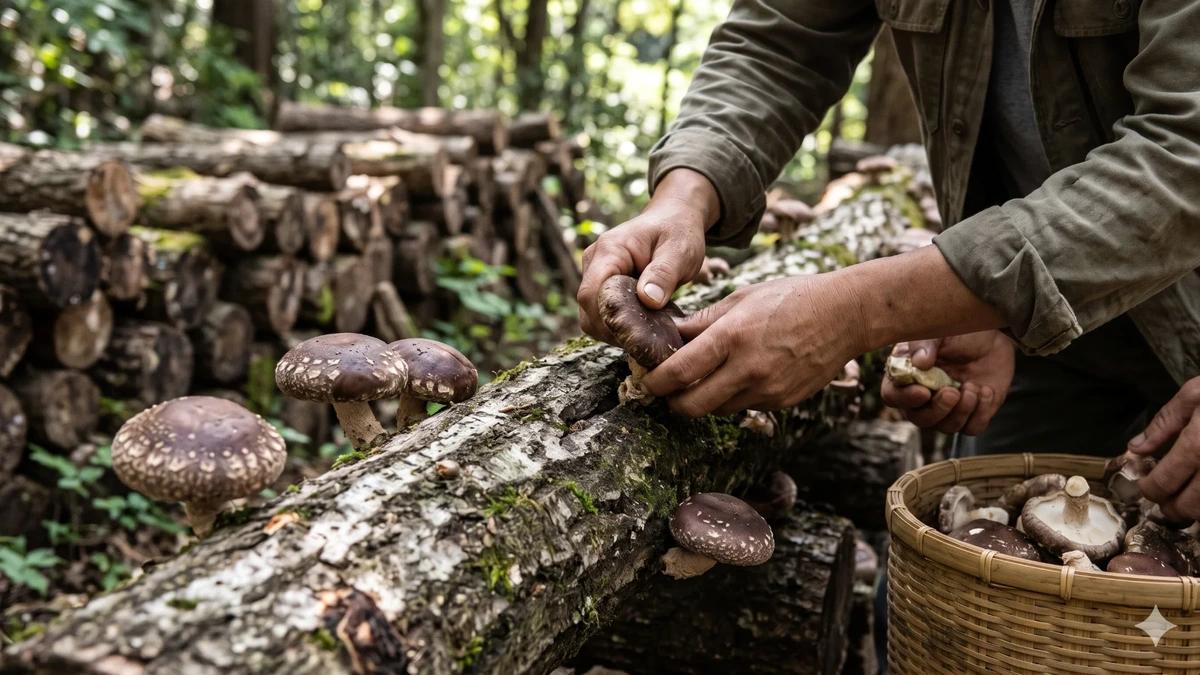
Walk through the lanes of Uttam Nagar, Mohan Garden, Nawada, Bindapur, or Mahavir Enclave, and then drive just 10 minutes across the metro line into Dwarka (Sectors 1 to 29), Janakpuri, Vikaspuri, Tilak Nagar, or Rajouri Garden. You will immediately notice something fascinating about West Delhi: the production space and the high-paying buyer live right next door to each other.
On one side—in areas like Uttam Nagar, Dabri, Palam, Hastsal, and Subhash Nagar—thousands of hardworking families, college students, job seekers, and homemakers have an unused 10×10 ft top-floor room, a ground-floor stilt corner, or a small rented shutter in a 50-gaj to 100-gaj house. On the other side—inside Dwarka's 350+ gated CGHS apartment societies and Janakpuri–Rajouri Garden's booming restaurant corridor—families and chefs are paying ₹45 to ₹50 per 200-gram packet (₹225 to ₹250 per kg) for fresh, chemical-free Button and Oyster mushrooms.
Yet, when beginners from West Delhi call us to join our practical mushroom farming training course, they all share the same honest doubts:
“Sir, my house in Uttam Nagar/Nawada is only 50 gaj; can a 10x10 room really hold enough bags to generate a meaningful monthly income?”
“During November to January, West Delhi's AQI crosses 400 with heavy smog and dust—if I turn on the exhaust fan for fresh air, won't polluted air spoil my white mushrooms?”
“Why did my first harvest come out well, while the 2nd and 3rd flushes produced almost nothing?”
Drawing directly from our hands-on experience training growers across Delhi NCR, here is the step-by-step, ground-level playbook for starting and scaling an indoor mushroom unit in West Delhi.
The 50-Gaj House Space Hack: How to Fit 140 Bags Inside a 10x10 ft Room
In compact West Delhi neighborhoods like Mohan Garden, Vipin Garden, Tilak Nagar, Fateh Nagar, and Hari Nagar, floor space is precious. If you simply keep mushroom bags on the floor, a 10×10 ft room will barely hold 30 bags—which is a hobby, not a business.
In our mushroom cultivation training course, we teach the Slotted-Angle Iron Rack Blueprint (the same heavy-duty grey iron angles used in warehouse shelves, easily available in Mayapuri or Tilak Nagar hardware markets):
| Rack Specification | Exact Measurement for a 10x10 ft Room | Why This Exact Dimension Matters |
|---|---|---|
| Number of Racks | 2 Parallel Racks along the 10-ft walls + 1 Center/Back Rack | Leaves a clean 2.5-foot walking aisle so you can spray water and harvest comfortably without brushing against pinheads. |
| Shelf Width & Height | 2.5 ft Wide × 8 ft High (Divided into 4 Vertical Tiers) | Keeps the top tier 2 feet below the ceiling fan so warm air doesn't dry out the top bags. |
| Bottom Shelf Ground Clearance | 9 Inches above the floor tiles | Heavy Carbon Dioxide (CO2) and floor dampness stay in the bottom 6 inches; lifting the first shelf prevents bottom-bag pinhead death. |
| Total Bag Capacity | 130 to 150 Oyster Bags (or 90 to 110 Button Compost Bags) | Triples your room's production capacity under a ₹7,500 to ₹11,000 starter budget. |
(Anti-Rust Tip from Our Training): Before placing moist bags on iron racks, always coat the angles with a ₹200 tin of red-oxide primer and lay a 200-micron plastic sheet on each shelf. Your racks will last 10+ years without a single spot of rust.
Solving West Delhi's #1 Winter Problem: How to Give Fresh Air When Outside AQI & Smog Cross 400
No textbook or generic YouTube channel talks about this, because most content isn't written by people who have actually grown mushrooms in Delhi's winter.
Between November and January, when White Button and Oyster Mushrooms are in their peak fruiting stage along the Najafgarh Road and Ring Road belt (Uttam Nagar, Janakpuri, Rajouri Garden, Moti Nagar), outside air is thick with construction dust, vehicular soot, and winter smog.
What Goes Wrong:
During fruiting, mushrooms need fresh oxygen 3 to 4 times a day to keep CO2 below 1,000 ppm. When untrained growers turn on their window fan to pull outside air in, fine black smog particles and airborne fungal spores settle directly on the moist white mushroom caps—turning them dull grey, blocking cap pores, and triggering Cobweb Mold (Cladobotryum).
Our ₹180 “2-Stage Wet-Filter Intake” Solution:
- Never pull outside air directly onto your mushroom beds. Instead, fit your air-intake window with a double layer of washable 100-GSM Non-Woven Polypropylene Filter Cloth (the same breathable material used in surgical masks and RO pre-filters, costing ₹60/meter) sandwiched behind a fine mosquito mesh.
- During peak smog days, place a thin moistened Cooler Khus Pad (Wood-Wool Pad) over the intake vent. As air passes through the damp pad, 90% of suspended dust, soot, and competing mold spores get trapped in the wet fibers—while clean, humidified, oxygen-rich air enters your mushroom room!
Problem Solved: “Why Did My Bags Give Good Mushrooms in the 1st Flush, Then Stop in the 2nd & 3rd Flush?”
A common frustration we hear from self-taught beginners in Dwarka Mor, Vikaspuri, and Subhash Nagar is: “Sir, the first harvest (1st Flush) gave 800 grams per bag, and I thought I had mastered mushroom farming. Then for the next 15 days, the bags just sat there dry and gave barely 150 grams in the 2nd flush!”
In commercial mushroom science, 60% of your costs are covered by the 1st flush, while your pure profit comes from the 2nd and 3rd flushes. Here is why untrained growers lose their 2nd and 3rd flushes—and the exact recovery protocol we teach in our training course:
• Mistake 1 – Leaving Dead Stems (Root Butts) Inside the Bag:
When beginners harvest Oyster or Button mushrooms by cutting them with a knife or scissors, they leave the bottom stub of the stem stuck in the straw or casing soil. Within 3 days, that leftover stub rots, turns slimy, and attracts green mold (Trichoderma), locking up the bag.
The Correct Way: Always harvest by gently twisting and pulling the entire cluster/stem out from the base, then immediately fill the tiny crater in Button mushroom bags with fresh pasteurized casing soil.
• Mistake 2 – Continuous Watering Right After Harvest:
After pushing out the 1st flush, the mycelium inside the bag is exhausted and broken. If you keep spraying heavy water immediately after picking, you drown the broken hyphae threads.
The 3-Day Dry Rest Protocol: After completing the 1st flush harvest, stop direct water spraying on the bags for 3 days (maintain only light floor/air humidity at 75%). Let the white mycelium heal and reclaim the substrate. On Day 4, resume misting and give a 15-minute fresh-air cooling drop—your 2nd flush pinheads will erupt across the bag within 5 to 6 days!
• Mistake 3 – Core Dehydration in Oyster Bags:
By the end of the 2nd flush, an Oyster mushroom bag has lost 40% of its internal water weight (since fresh mushrooms are 90% water). In our course, we teach the Clean Water Injection / Dipping Rehydration Technique to restore internal bag moisture so even your 3rd flush comes out heavy and fleshy.
Where to Source Straw & Spawn in West Delhi (Local Supply Chain)
You don't need to hire a tempo from Haryana to run a room unit in West Delhi:
Doorstep Lab-Tested Spawn Delivery:
At Organic Mushroom Farm, we dispatch pure, first-generation, high-yield Button (U-3/S-11), White/Grey Oyster, and Summer Milky Mushroom Spawn directly to all West & South-West Delhi pincodes—including Dwarka (110075, 110077, 110078), Uttam Nagar (110059), Janakpuri (110058), Vikaspuri & Tilak Nagar (110018), Rajouri Garden (110027), Paschim Vihar (110063), and Palam (110045).
Local Wheat Straw (Turi/Bhusa) & Readymade Compost:
- Clean wheat straw is readily available in 30-kg bags right around Kakrola Dairy, Goela Dairy, Nangli Dairy (Najafgarh Road), Matiala, and Hastsal at ₹8 to ₹10 per kg.
- For residents in Dwarka apartments or Janakpuri builder floors who want zero straw boiling at home, we connect our students with pre-pasteurized, ready-spawned Button Mushroom Compost Bags that can be placed straight onto your room racks.
West Delhi's Goldmine Market: How to Sell at ₹180–₹240/Kg Without Middlemen
West Delhi offers three distinct, high-cashflow selling channels right within 3 to 6 km of your room:
Channel 1: Dwarka's 350+ CGHS Apartment Societies (The “MyGate & WhatsApp” Model)
Dwarka Sectors 4, 5, 6, 7, 9, 10, 11, 12, 18, 19, 22, and 23 are packed with gated apartment societies where families actively look for fresh, pesticide-free vegetables.
How Our Trainees Do It: Instead of dumping ungraded mushrooms in a mandi, pack 200 grams of clean, uniform mushrooms in a food-grade punnet tray wrapped in breathable cling film with a simple label: “Harvested Today in West Delhi – 100% Chemical-Free.”
Tie up with 5 to 8 society gate vegetable vendors (Safal carts / local Mom-and-Pop grocery stores in Sector 6, 10, and Ramphal Chowk Sector 7) or list on society WhatsApp delivery groups at ₹40 to ₹50 per 200g pack (₹200–₹250/kg). Selling just 60 packets a day (12 kg) brings in ₹2,400 to ₹3,000 daily cash!
Channel 2: Janakpuri District Centre, Tilak Nagar & Rajouri Garden Cloud Kitchen Belt
West Delhi is the street-food and cloud-kitchen capital of the city. Think about the sheer daily volume of mushrooms consumed in:
- Tilak Nagar & Subhash Nagar: Famous across Delhi for Tandoori Momos, Malai Mushroom Tikka, Mushroom Rolls, and gravy chaap/mushroom joints.
- Janakpuri District Centre, Jail Road & Vikaspuri: Hundreds of cafes, pizza outlets, Chinese delivery kitchens (Zomato/Swiggy hubs), and banquet halls along Mayapuri–Rama Road.
- Rajouri Garden & Tagore Garden: High-end continental lounges, North Indian fine-dining restaurants, and micro-breweries.
The Pitch: Restaurants hate wet, bruised, 2-day-old mandi mushrooms that turn black when cooked. When you deliver dry, firm, snow-white mushrooms harvested the same morning at ₹150 to ₹180/kg, kitchen managers lock in standing daily orders immediately.
Channel 3: Keshopur Sabzi Mandi (Instant Bulk Wholesale)
Located right near Tilak Nagar / Vikaspuri on Outer Ring Road, Keshopur Mandi is West Delhi's biggest wholesale vegetable hub. If your production scales up to 50 kg–200 kg a day, you can sell your entire bulk stock between 5:30 AM and 8:30 AM for instant cash without ever driving to North Delhi's Azadpur Mandi!
(Bonus Training Tip – Why Punnet Boxes Turn Sweaty & Brown): Many beginners wrap warm mushrooms with normal kitchen plastic wrap, trapping moisture inside the box and turning the mushrooms brown by evening. In our course, we teach the 15-Minute Pre-Cool + 2-Corner Micro-Perforation Method so your punnet trays stay crisp white for 4 days in retail fridges!
Why Join Organic Mushroom Farm's Certified Training Course?
Whether you want to build a ₹25,000/month part-time income from a spare room in Uttam Nagar or Palam, or launch a full-scale commercial unit near Dwarka Expressway / Najafgarh border, our Online & Offline Practical Training Program gives you:
100% Practical, Scientific SOPs
Exact water TDS/pH balancing, smokeless drum pasteurization, casing soil preparation, CO2-temperature pinning triggers, and 2nd/3rd flush yield boosters.
Valid Certificate & DPR Support
Use your certificate and project report to apply for Pradhan Mantri Mudra Loans (₹50,000 to ₹5 Lakh) or the 35% PMFME Food Processing Subsidy through banks in Janakpuri, Dwarka, or Uttam Nagar.
Lifetime 1-on-1 Support
Stuck at any stage? Send a photo of your bag or room thermometer to our experts via WhatsApp/Telegram and get instant troubleshooting.
Real Questions from West Delhi Growers (Hinglish & Voice-Search FAQs)
Q1: "Sir, Uttam Nagar aur Nawada me 50 gaj ke makan ke upar wale kamre me garmi ke time mushroom kaise ugaye?"
A: From September to March, your top-floor room will easily grow Oyster and Button Mushrooms without any AC. From April to August, when the roof gets hot, we teach you to switch to Milky Mushroom (Calocybe indica), which thrives in 30°C to 38°C heat, combined with a simple ₹500 white-lime roof wash and wet gunny-bag wall lining.
Q2: "Dwarka ki society me bina dukaan khole mushroom bechne ke liye koi license lagta hai kya?"
A: If you are selling packed 200g trays under your own brand name to local grocery stores or through WhatsApp in Dwarka and Janakpuri, you only need a basic ₹100/year FSSAI Petty Food Business Registration (which takes 15 minutes online on the FoSCoS portal—we show you the exact steps inside our training course).
Q3: "West Delhi (Dwarka, Janakpuri, Uttam Nagar, Tilak Nagar) me Mushroom Training aur Spawn kaise book karein?"
A: Simply visit organicmushroomsfarm.com to enroll in our Online Practical Training Course (or book an offline workshop seat) and order 100% pure, lab-tested Button, Oyster, or Milky Mushroom Spawn with fast 2-to-3-day doorstep delivery across all West Delhi pincodes.
Turn Your Spare Room in Uttam Nagar, Dwarka or Janakpuri into a Fresh Cashflow Unit
Join hundreds of successful urban growers trained by Organic Mushroom Farm. Get certified, master climate control, order lab-tested spawn, and sell directly to high-paying societies.