Best Mushroom Farming Training Guide In India
Your blueprint to launching a successful, highly profitable agribusiness.
Are you dreaming of starting your own agribusiness but aren't sure where to begin? Over the last few years, mushroom farming in India has exploded into a highly profitable venture. From small home-based setups to large-scale commercial facilities, the demand for fresh, healthy fungi is higher than ever.
However, trying to learn purely from random YouTube videos often leads to costly mistakes—like contaminated compost or failed yields. This is exactly why a structured mushroom cultivation course is the secret weapon for modern agropreneurs. Let's break down everything you need to know about getting the right training and launching a successful organic mushroom farm.
Why is a Structured Curriculum So Important?
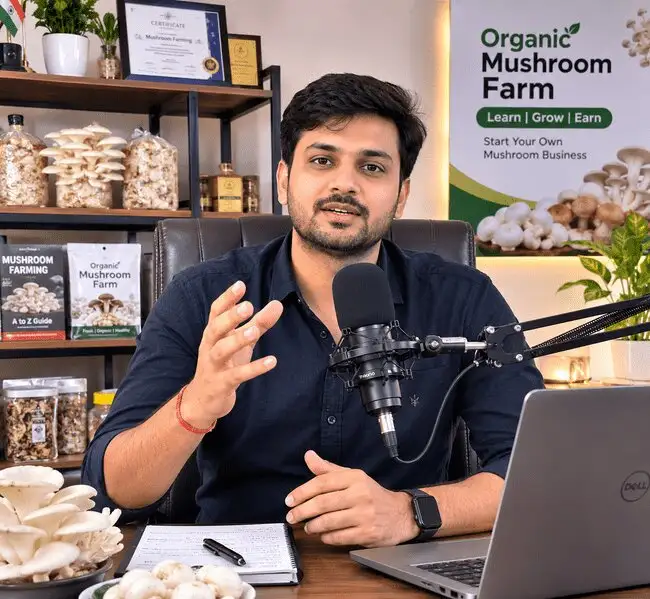
Mushroom cultivation isn't just about planting seeds in the dirt; it's a precise science. A high-quality training program provides a structured curriculum that takes you from total beginner to confident grower.
When you learn systematically, you understand the vital mechanics behind temperature, humidity, and ventilation. A well-structured course doesn't just teach you how to grow crops; it helps you decide whether oyster mushroom farming, high-demand button mushroom cultivation, or exotic milky mushrooms are the best fit for your local climate and market.
What Should a Top-Tier Course Cover?
If you are looking to enroll in an online mushroom training course or attend an offline workshop, ensure the syllabus covers these foundational pillars:
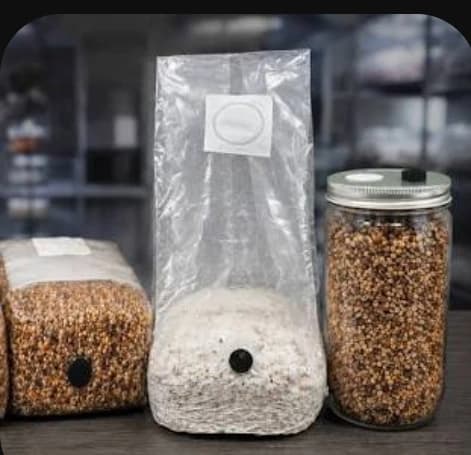
- Button Mushroom Spawn Preparation: This is the heart of your business. The quality of your spawn (the "seed") dictates your entire yield. Advanced courses will teach you the highly technical, multi-step process of preparing premium spawn in sterile lab conditions.
- Substrate & Compost Making: Understanding the difference between the long method and short method of composting, and how to select the right agricultural waste (like wheat or paddy straw).
- Casing & Spawning Techniques: The exact science of mixing spawn into the compost and preparing the casing soil to stimulate fruiting.
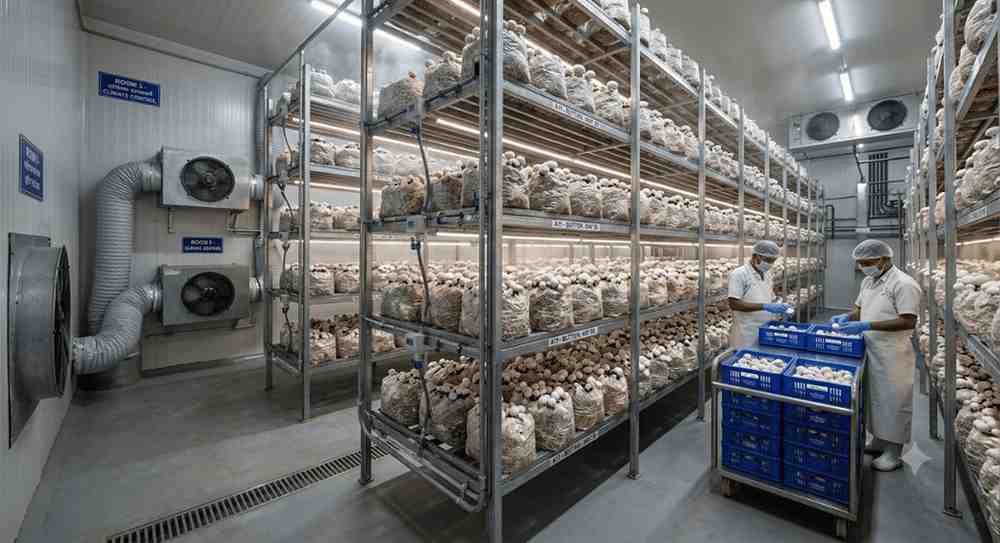
- Climate Control & Farm Setup: How to design a low-cost bamboo shed for beginners, or a fully automated, climate-controlled AC room for commercial turnkey setup scaling.
- Disease Management: How to identify and naturally treat common issues like green mold or cobweb disease without relying on harsh chemicals.
Where to Get Mushroom Training in India?
India offers a great mix of government-backed institutions and modern private platforms for aspiring growers:
- KVK (Krishi Vigyan Kendra): Located in almost every district, KVKs offer highly subsidized, short-term agriculture business training and practical farm exposure.
- ICAR-DMR, Solan: The Directorate of Mushroom Research in Himachal Pradesh is the premier institute in the country. A certificate from here holds massive weight, though securing a seat can be highly competitive.
- Dedicated Online Platforms: Modern online training platforms are revolutionizing how people learn to farm. They offer detailed video lessons, structured lesson scheduling, and active community support. These platforms allow you to learn at your own pace while balancing a job, making it easier than ever to build an organic mushroom farm from the ground up.
Government Subsidies & Agriculture Loans
One of the biggest advantages of this sector is the low investment business plan. If you want to scale up, the Indian government offers substantial financial backing. Organizations like NABARD and the National Horticulture Board (NHB) provide a mushroom farming subsidy ranging from 40% to 50% for commercial setups, including spawn labs and compost units. Having a legitimate training certificate makes the process of securing an agriculture loan significantly smoother. Check our Mushroom Farming Business Plan Guide for detailed financial and capital budgeting insights.
Frequently Asked Questions (Q&A)
Q1: How much money do I need to start a mushroom farm in India?
Ans: If you want to test the waters, you can start small with oyster mushrooms in a spare room for just ₹5,000 to ₹10,000. However, if you are looking at a commercial AC setup for button mushrooms, the investment can range from ₹15 Lakhs to ₹25 Lakhs, depending on the capacity.
Q2: Which type of mushroom is best for beginners?
Ans: Oyster mushrooms are highly recommended for beginners because they are incredibly resilient, grow easily at room temperature (20°C - 30°C), and require less complex compost. Button mushrooms require strict climate control (15°C - 18°C) and pasteurized compost, making them a bit more challenging but highly rewarding financially.
Q3: Can I actually learn mushroom farming through an online course?
Ans: Absolutely! In fact, online courses with well-designed curriculums are often better because you can pause, rewind, and re-watch technical steps—like spawn preparation or casing—while you are physically doing them on your own farm.
Q4: How do I find buyers for my harvest?
Ans: Start local. Approach nearby restaurants, hotels, and local vegetable mandis. As you scale, you can list your produce on B2B platforms, tie up with supermarket chains, or even dry your mushrooms to create value-added products like mushroom powder, which has a much longer shelf life.
Ready to Master Commercial Mushroom Farming?
Join our certified practical online or offline mushroom cultivation program and build a sustainable agri-business with 100% handholding support.